💧 Give a well in the name of a loved one: a gift that flows forever.
🌳 Plant a tree today and reap rewards for eternity.
🎁 Looking for an unforgettable gift? Give a sadaqah jariyah in your parents’ name.
📖 “The best charity is giving water to drink.” (Narrated by Abu Dawud)
📖 “Charity never decreases wealth.” (Muslim)
📖 “Whoever plants a tree will be rewarded for every creature that benefits from it.” (Bukhari and Muslim)
Yes, a water well is sadaqah jariyah, and it is the example the Prophet ﷺ himself gave. This article goes through the three hadiths behind that answer, what scholars add about intention and ownership, and what makes a well a real ongoing charity rather than a photo.
In short
A well keeps giving water after you have paid for it: that is the definition of sadaqah jariyah.
Asked which charity was best for a deceased mother, the Prophet ﷺ answered “water”, and Sa’d dug a well (Abu Dawud 1681).
“Whoever digs a well, no living thing drinks from it but he is rewarded” (Sahih Ibn Khuzaymah 1292).
It counts whether you build it yourself, through a charity or through a company. What matters is that the well exists and is used.
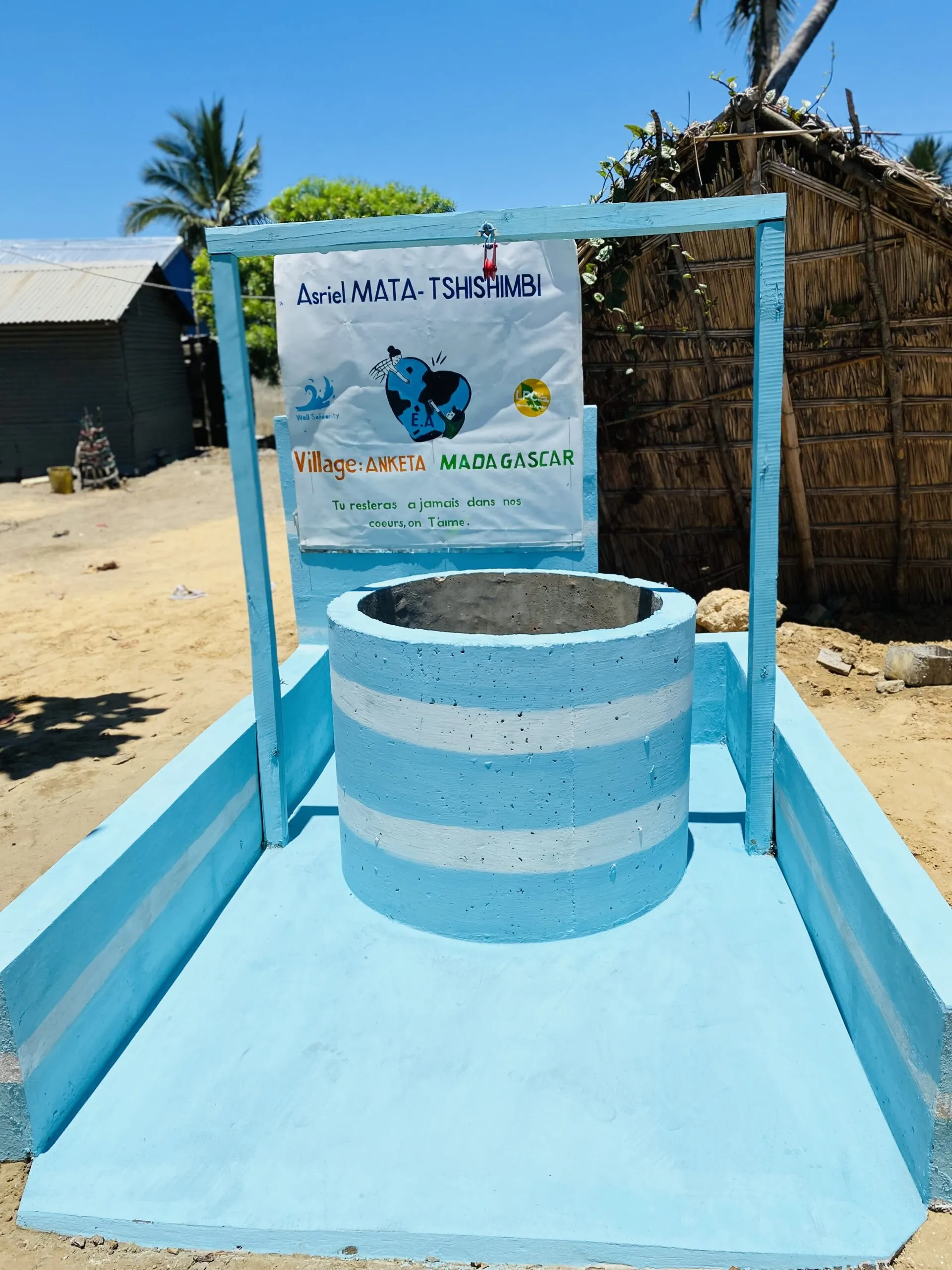
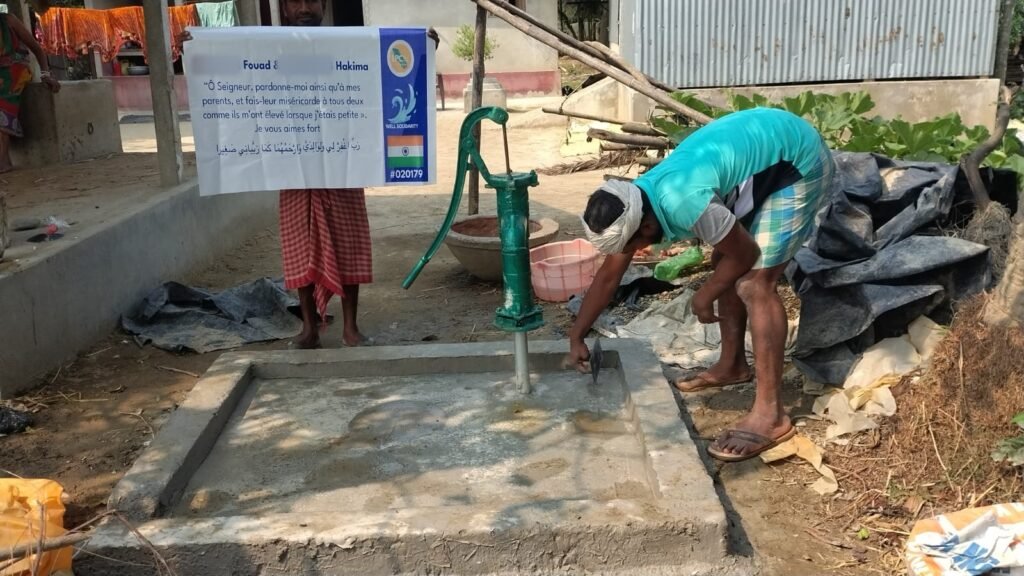
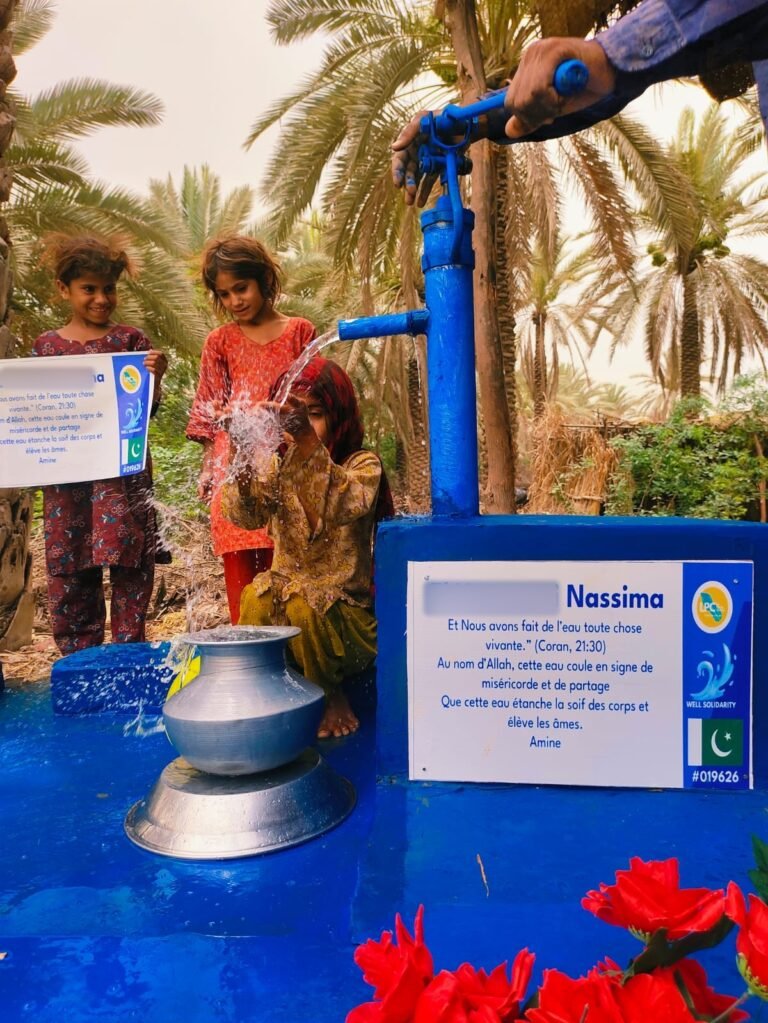
Finishing the platform. The plaque carries the Qur’anic dua for parents, in French and Arabic, chosen by the customer.
The hadith of the three deeds
The starting point for any question about ongoing charity is the hadith of Abu Hurayrah: when a person dies, their deeds end, except an ongoing charity, beneficial knowledge, and a righteous child who prays for them (Sahih Muslim 1631). A well fits the first category exactly. The day it is finished, a village starts drinking from it, and nothing you do afterwards changes that. The benefit flows on its own.
“Which charity is best?” “Water.”
The second text is the one people quote most, because it is about a well in particular.
Hadith
Sa’d ibn Ubadah said: “O Messenger of Allah, Umm Sa’d has died; which charity is best?” He said: “Water.” So Sa’d dug a well and said: “This is for Umm Sa’d.”
Sunan Abi Dawud 1681, graded hasan by al-Albani. Also reported in Sunan an-Nasa’i 3664 and Sunan Ibn Majah 3684, with weaker chains.
Three things stand out. Sa’d asked about charity on behalf of someone who had died, so the ruling covers wells in memory of a parent. The answer was one word, water, with no condition on size or cost. And Sa’d did not just give money: he had a well dug and dedicated it by name. That is the model most Muslims follow today when they put a parent’s name on a plaque.
“No living thing drinks from it but he is rewarded”
Hadith
“Whoever digs a well from which a living creature drinks, whether jinn, human or bird, Allah will reward him on the Day of Resurrection.”
Sahih Ibn Khuzaymah 1292; also Sahih Ibn Hibban. Graded hasan by al-Albani in Sahih at-Targhib 964.
This is the hadith that explains why a well is counted among the best of all ongoing charities: the reward is not limited to the people you intended. The goat that drinks, the bird that lands on the rim, the traveller who passes once, all count. A hand pump in a Pakistani village is used by every family nearby, by their animals, and by whoever walks by. You cannot know how many, and you do not need to.
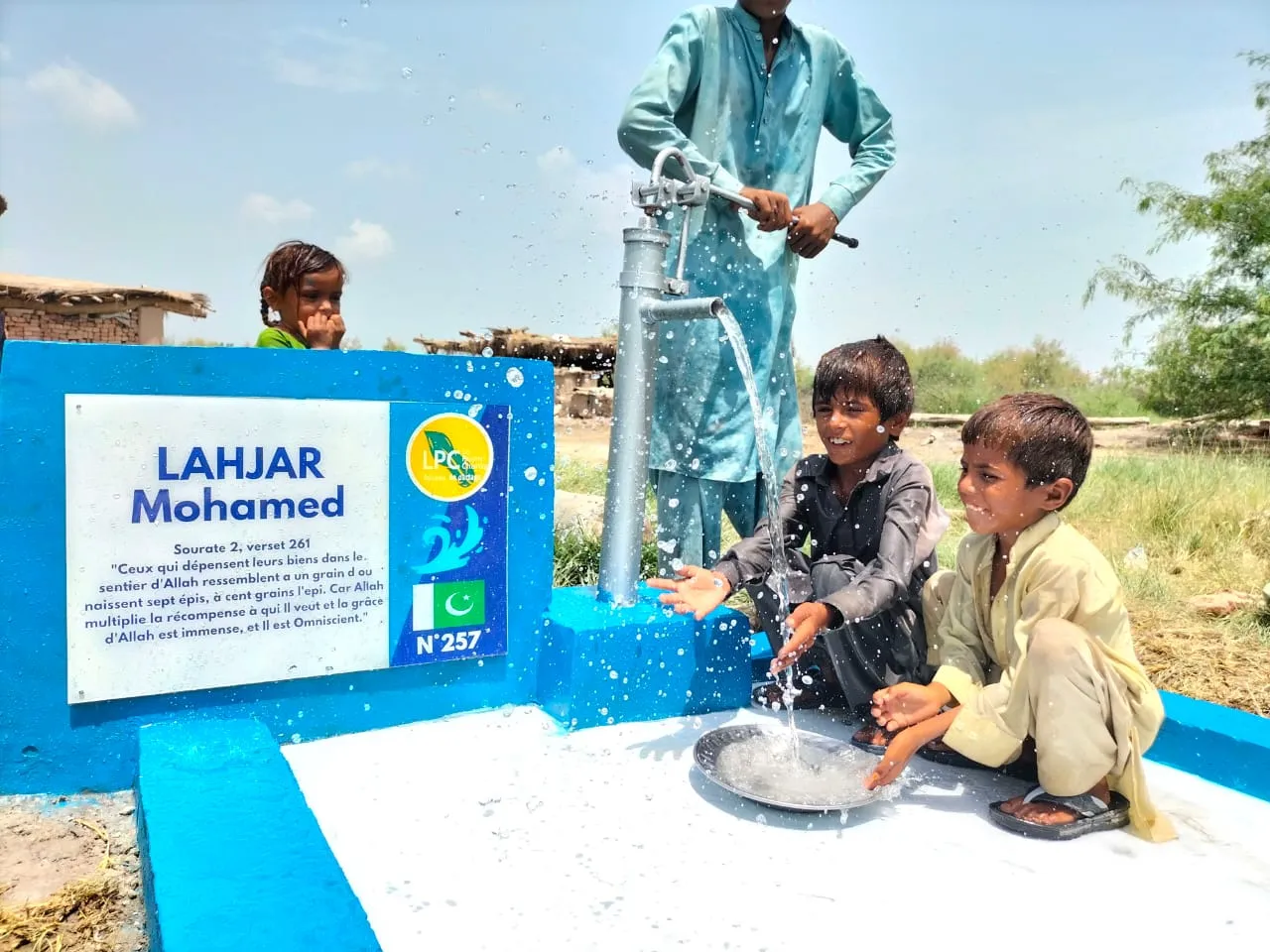
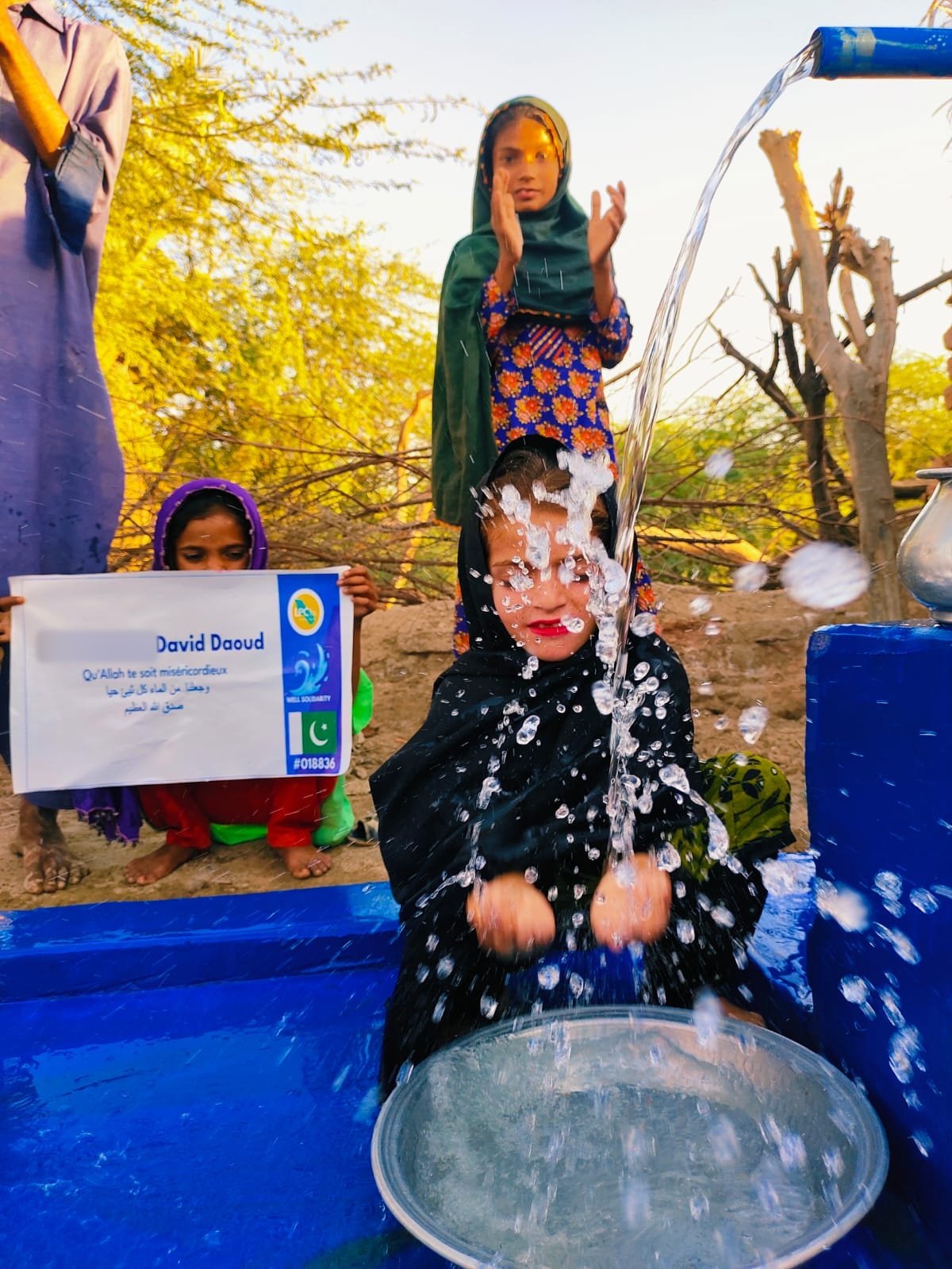
Whoever digs a well from which a living creature drinks is rewarded: here, a hamlet in Sindh.
Who drinks from it
The hadith names “jinn, human or bird”. In a hamlet of Sindh, that means the children first, then the goats, then whoever passes on the road. The reward follows the water, not the guest list.
Does it still count if a company builds it?
The question comes up because most wells advertised in the UK and the US are sold by charities, and Well & Trees is a company. The answer from the texts is that the charity is the water, not the builder. Sa’d did not dig his well with his own hands; he had it dug. What makes the deed yours is your intention and your money. What makes it real is that the well exists and people drink from it.
A company changes two practical things. First, you pay a fixed price for a fixed thing, so you know what you bought: a hand-pump well, in Sindh, for £195, with a plaque. Second, you receive proof, because the company owes you a product: GPS coordinates, photos, a video of the first water. We also take a margin, and we say so on our About page. None of that changes the reward; it changes how sure you are that the well is there.
From your order to the video
About three months, with an email at each step.
What makes a well a real sadaqah jariyah
Not every “well” sold online keeps giving. Four questions separate an ongoing charity from a one-off photo.
Is there water? A well that is dry after a season is not jariyah. A serious builder tests the depth and the water before handing over; our hand-pump wells reach 10 to 35 metres, below the seasonal drop.
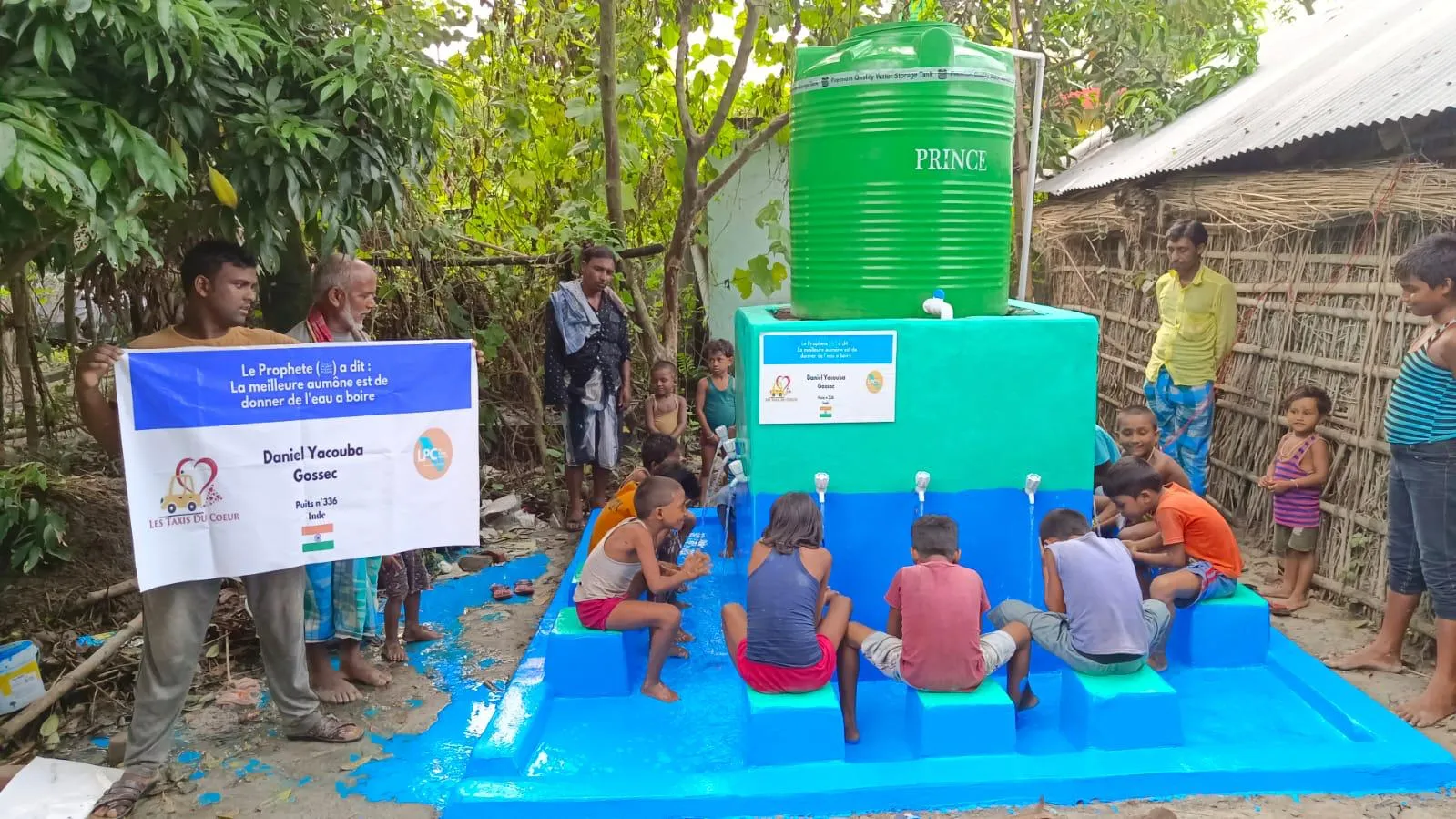
Who uses it? A well behind a locked gate serves one family. Ours are placed by the village, at a point that several families and their animals can reach. That is why the hadith about “jinn, human or bird” matters.
Who maintains it? A hand pump is simple on purpose: no electricity, parts that a village mechanic can replace. The builder should commit to repairs; ask about the guarantee.
Can you see it? GPS coordinates, dated photos and a video are not vanity. They are how you know the deed exists. Keep them with your family papers.
Features of aSimple Well
Perforated casing with filter tip: the completed well rests on a robust, perforated tube finished with a tip; a screen attached at the end lets water pass while keeping out fine particles (sand, debris), ensuring clear water from the moment it is captured.
Driven method (percussion): a heavy drill bit, suspended on a rope or cable, is repeatedly lifted and dropped; the impact breaks up the soil and gradually drives the casing down to the water table.
Water injection method: pressurized water is injected into the tube; as it escapes at the bottom, it fluidizes the soil and facilitates the successive insertion of casing segments, ideal for loose to compact soils.
Caisson sinking method: a wide circular casing is first erected at the surface, then excavation continues inside; under its own weight, the casing sinks as digging progresses, allowing much larger diameters for collective use.
Depth & diameter: wells are generally shallow, from less than 15 m up to 40 m depending on the soil and method; diameters range from 25 to 100 mm as standard, and can reach several metres with caisson sinking.
Construction time: full cycle of ≈ 3 months, from site selection to the first potability tests.
Number of beneficiaries: each completed well can serve up to 50 people, providing lasting access to safe drinking water.
Usually not, and it is worth being clear. Zakat is the obligatory 2.5 % that must reach the eight categories named in the Qur’an (9:60), most of them people in need. The majority of scholars do not accept building projects, including wells, as zakat, because the money is spent on construction rather than given to a poor person. A well is sadaqah, voluntary charity, which is exactly why it can be jariyah. We do not accept zakat, and we never describe our wells as zakat-eligible. The full comparison is in Sadaqah vs zakat vs lillah.
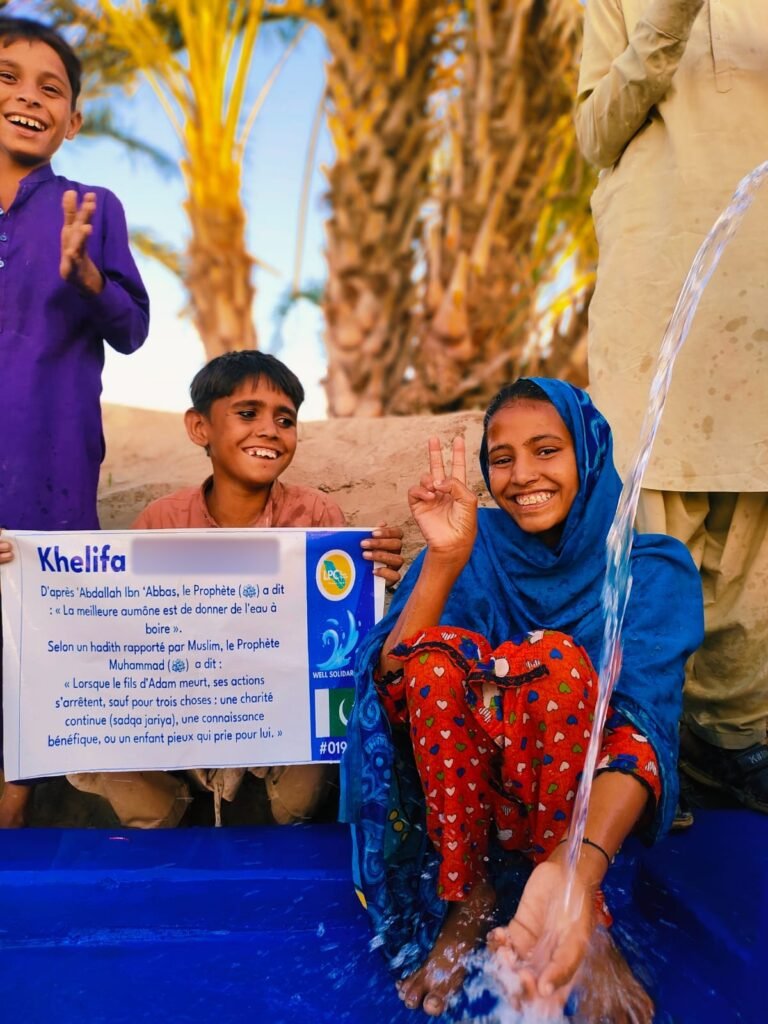
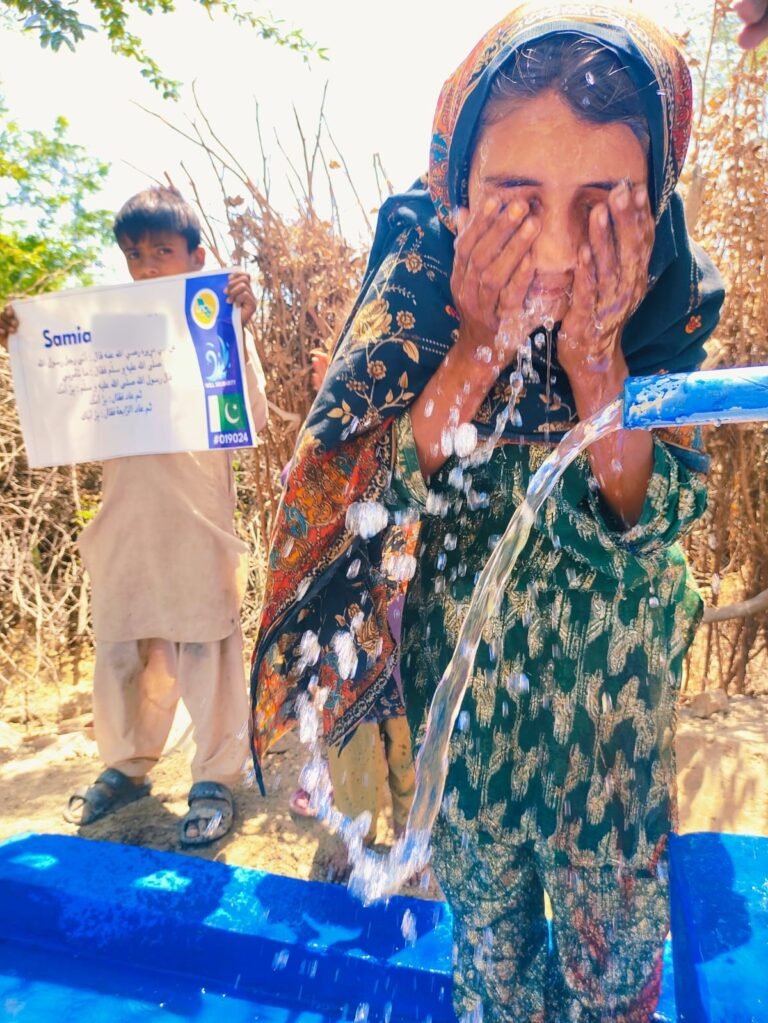
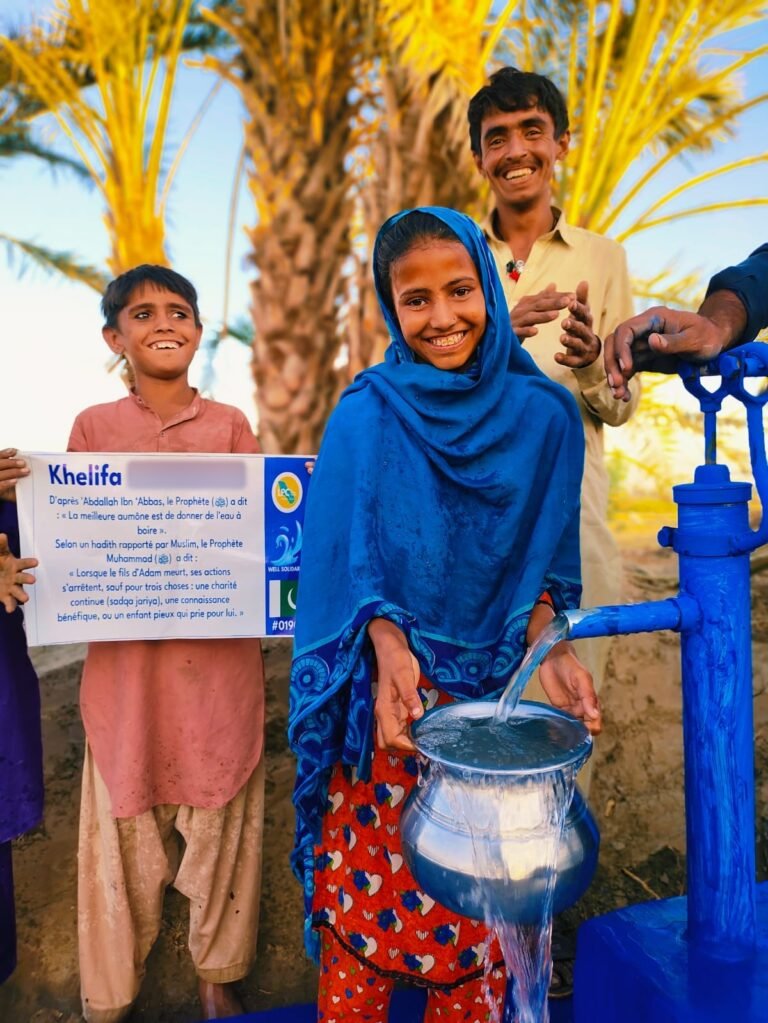
The pump is simple on purpose: no electricity, parts a village mechanic can replace.Filling the family pot. One hand-pump well serves up to 50 people.Inauguration day. The village decorates the well for the video.
Giving a well on behalf of someone who has died
Sa’d’s well was for his mother, and the ruling has not changed: a charity given on behalf of a deceased Muslim reaches them (Sahih al-Bukhari 1388). In practice, you write the name when you order, it goes on the plaque, and the photos and video show it. Many families order one well for a parent and put several names on the plaque of a larger well. Our guides to sadaqah jariyah for deceased parents and building a well in someone’s name cover the details, including what to do when the person was not Muslim.
Yes. A well keeps giving water after the day you pay for it, which is what sadaqah jariyah means (Sahih Muslim 1631), and water was the charity the Prophet ﷺ recommended to Sa’d ibn Ubadah for his late mother (Abu Dawud 1681).
How long does a well keep giving reward?
For as long as it gives water. A well-built hand pump lasts around ten years with normal maintenance, and can be repaired beyond that. That is why the quality of the build and the guarantee matter more than the price.
Can several people share one well as sadaqah jariyah?
Yes. Brothers and sisters often share one well for a parent and put all their names on the plaque. Each person’s intention and contribution count for them.
Do I need a religious certificate for the well to count?
No. The deed is the water that people drink. The certificate and the plaque are for you and your family; the GPS coordinates and the video are the proof that the well exists.
Is a water well better than feeding the poor?
Both are rewarded. Feeding someone is an immediate charity; a well is an ongoing one, which is why it was the answer given to Sa’d. Many people do both, and give the well in the name of someone who has passed away.
Sources
Sahih Muslim 1631 (the three deeds that continue after death).
Sunan Abi Dawud 1681, hasan (al-Albani); Sunan an-Nasa’i 3664 and Sunan Ibn Majah 3684, weaker chains (Sa’d ibn Ubadah’s well).
Sahih Ibn Khuzaymah 1292; Sahih at-Targhib 964 (whoever digs a well).
Sahih al-Bukhari 1388 (charity on behalf of the deceased).