💧 Give a well in the name of a loved one: a gift that flows forever.
🌳 Plant a tree today and reap rewards for eternity.
🎁 Looking for an unforgettable gift? Give a sadaqah jariyah in your parents’ name.
📖 “The best charity is giving water to drink.” (Narrated by Abu Dawud)
📖 “Charity never decreases wealth.” (Muslim)
📖 “Whoever plants a tree will be rewarded for every creature that benefits from it.” (Bukhari and Muslim)
Sadaqah jariyah is the charity that keeps giving after you have given it. A well that people still drink from, a tree that still bears fruit, a book that is still read. This guide explains what the term means, what the Prophet ﷺ said about it, which deeds count, and how to choose one that will still be working in twenty years.
In short
Sadaqah jariyah (صدقة جارية) means “flowing” or “ongoing” charity: a good deed whose benefit continues, so its reward continues too.
The Prophet ﷺ named it first among the three things that carry on after death (Sahih Muslim 1631).
Water is the classic example: a well dug in the name of a mother who had passed away (Abu Dawud 1681).
It can be given for yourself, as a gift, or on behalf of someone who has died.
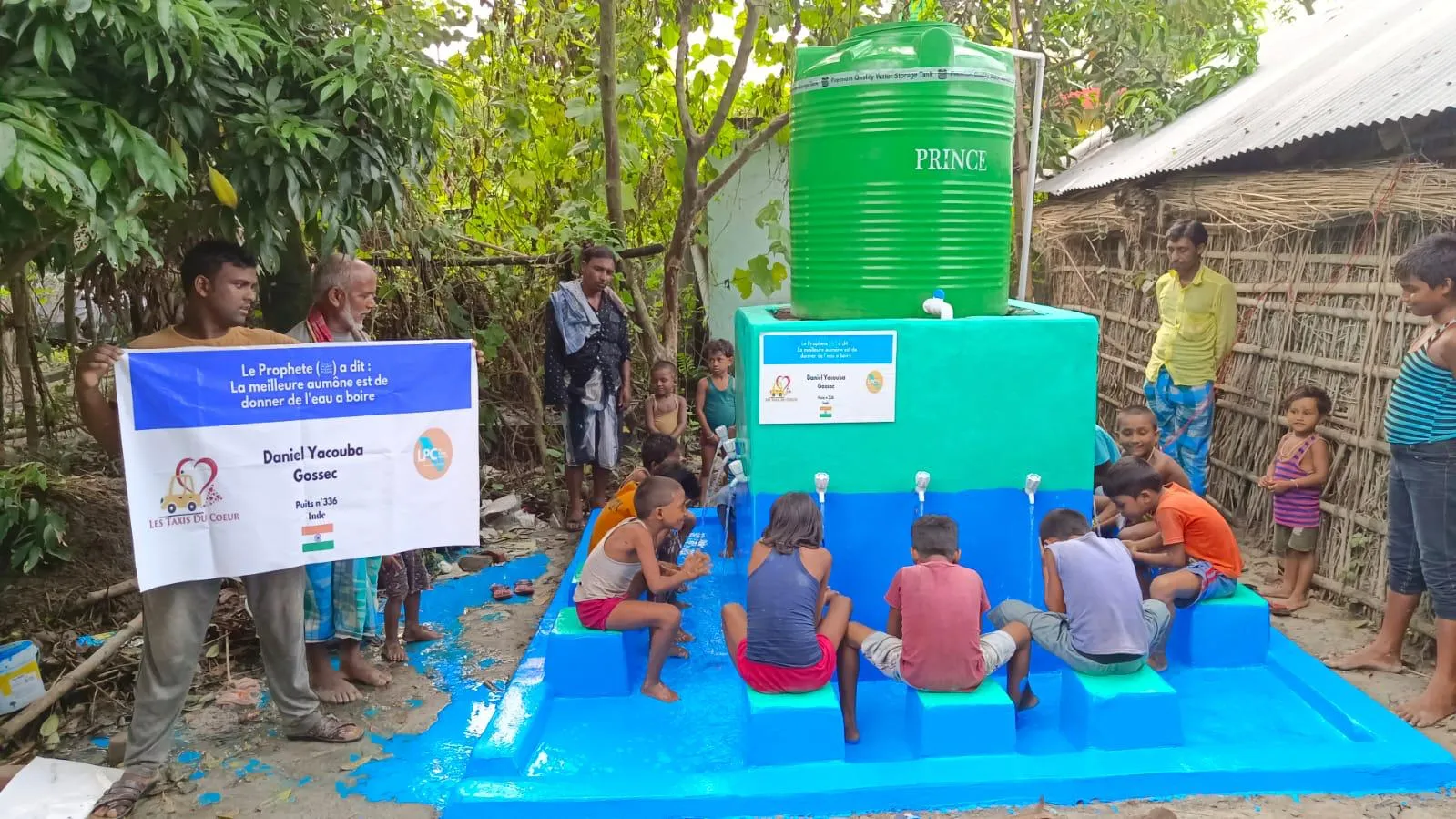
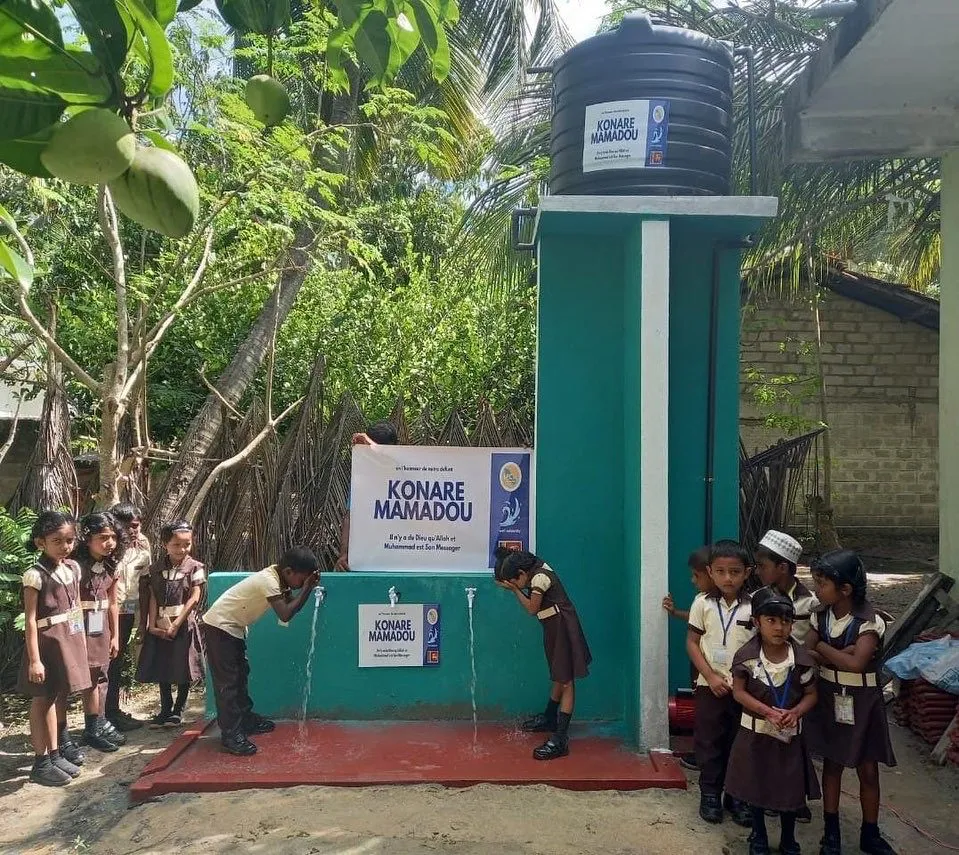
The whole village comes for the first water.
What does sadaqah jariyah mean?
Sadaqah is any voluntary charity, from a coin to a smile. Jariyah comes from the verb “to flow”, the same root used for a river. Put together, sadaqah jariyah is a charity that keeps flowing: you give once, and the benefit, and the reward, carry on without you.
The difference with an ordinary sadaqah is simple. Feeding a hungry person today is a great deed, but it ends when the meal ends. Digging a well that the same person drinks from every day for ten years is a deed that keeps producing good, long after you have forgotten about it. Scholars often describe sadaqah jariyah as a form of waqf, an endowment: something set aside whose fruit keeps being used.
Hadith
“When a person dies, their deeds come to an end except for three: an ongoing charity, knowledge that benefits others, and a righteous child who prays for them.”
Sahih Muslim 1631, narrated by Abu Hurayrah. Also in Sunan an-Nasa’i 3651 and Sunan Abi Dawud 2880.
This hadith is the foundation of the whole idea. Everything you do stops at death, with three exceptions, and the first one named is the ongoing charity. That is why so many Muslims try to leave at least one sadaqah jariyah behind them, and why so many give one on behalf of a parent who has passed away.
The three deeds that continue after death
Sahih Muslim 1631. A well or a tree is the first one; a child who prays for you is the third.
What the Qur’an says about charity that lasts
The Qur’an does not use the phrase “sadaqah jariyah”, but it describes the mechanism: a small act multiplied many times over.
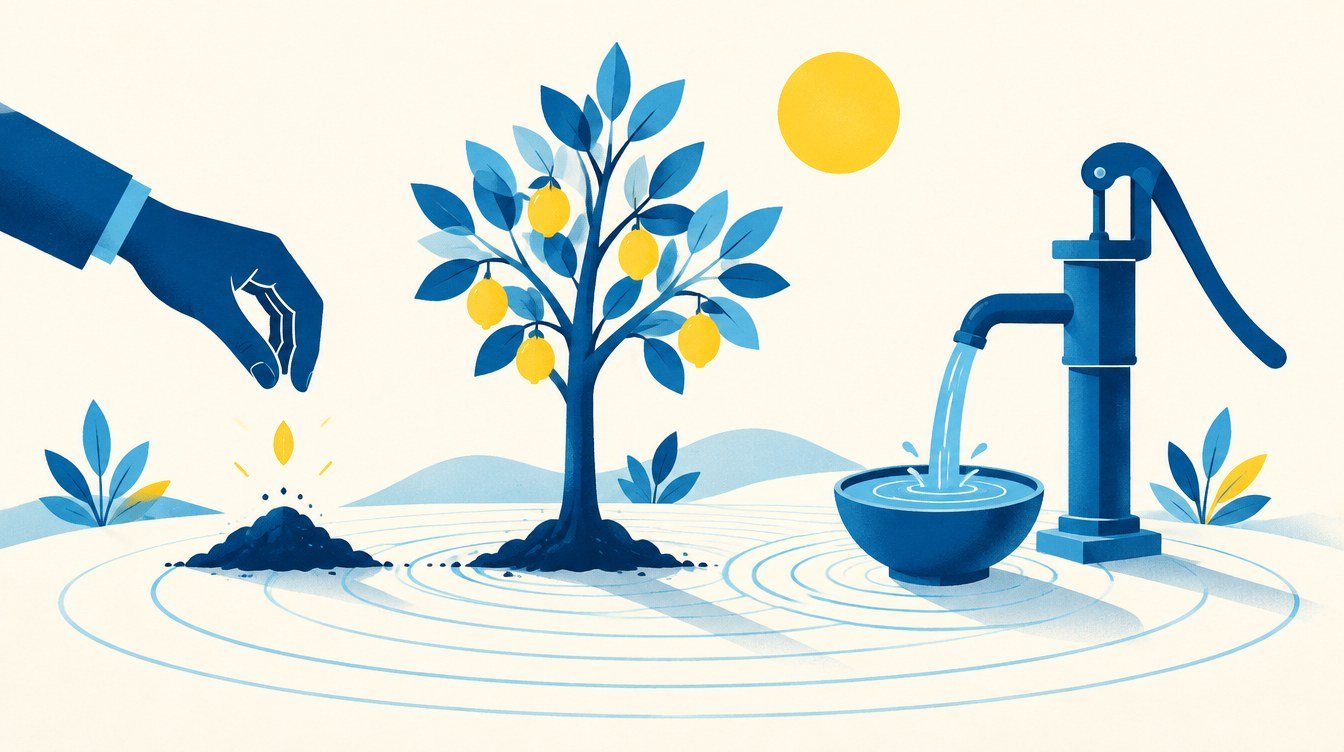
“The example of those who spend their wealth in the way of Allah is like a seed that grows seven ears, in every ear a hundred grains. And Allah multiplies for whom He wills.”
Surah al-Baqarah, 2:261
A seed is the perfect image of sadaqah jariyah: you plant once, and the harvest repeats. The verse that follows (2:262) adds a condition that matters for anyone building a well in someone’s name: the gift should not be followed by reminders of generosity or by hurt. Give it, and let it flow.
Some customers write a hadith on the plaque: here, the hadith of the three deeds that continue after death.
A hadith on the plaque
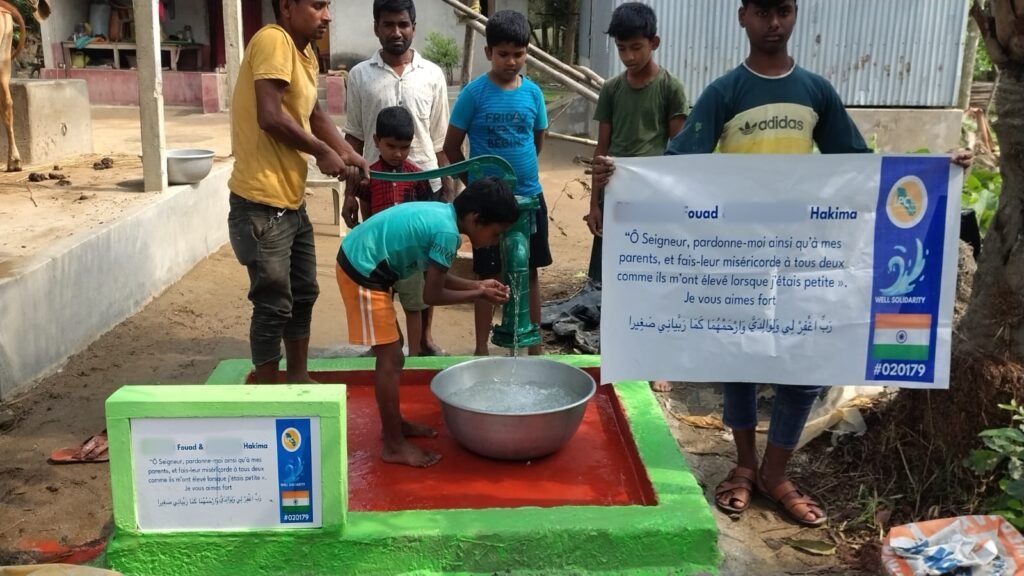
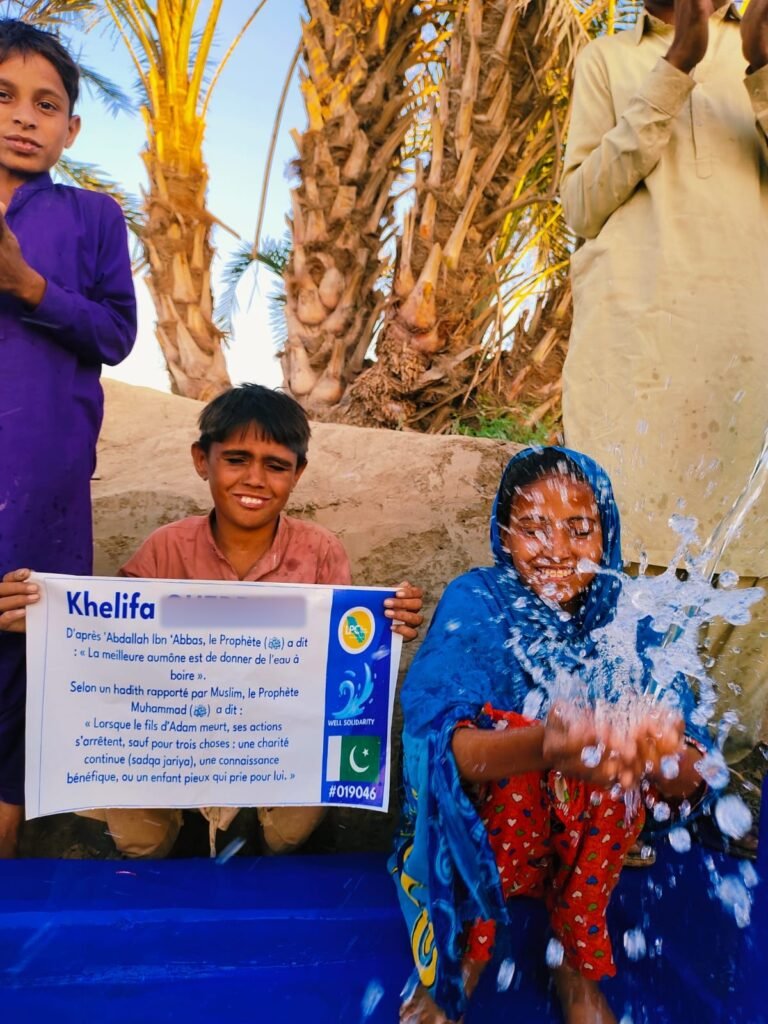
Some customers write the hadith of the three deeds on the plaque itself. The village reads it every day, next to the name of the person the well is for. The photo and the video show it; so does the GPS point, years later.
Why it matters so much to Muslims
Three reasons come up again and again when people explain why they chose an ongoing charity rather than a one-off gift.
Reward after death. The hadith of the three deeds is explicit. A sadaqah jariyah is one of the few ways to keep “earning” once your own time is over.
For a loved one. You can give it on behalf of someone who has died, and the reward reaches them. This is the most common reason customers give us for building a well: a mother, a father, a grandparent, sometimes a child.
Real, visible good. A well has GPS coordinates and a video. A tree has a plaque and a photo. You can see the deed, and so can your children.
12 examples of sadaqah jariyah
Scholars list many forms. Here are the twelve most common, roughly from the most accessible to the most ambitious. The first two are the ones we build.
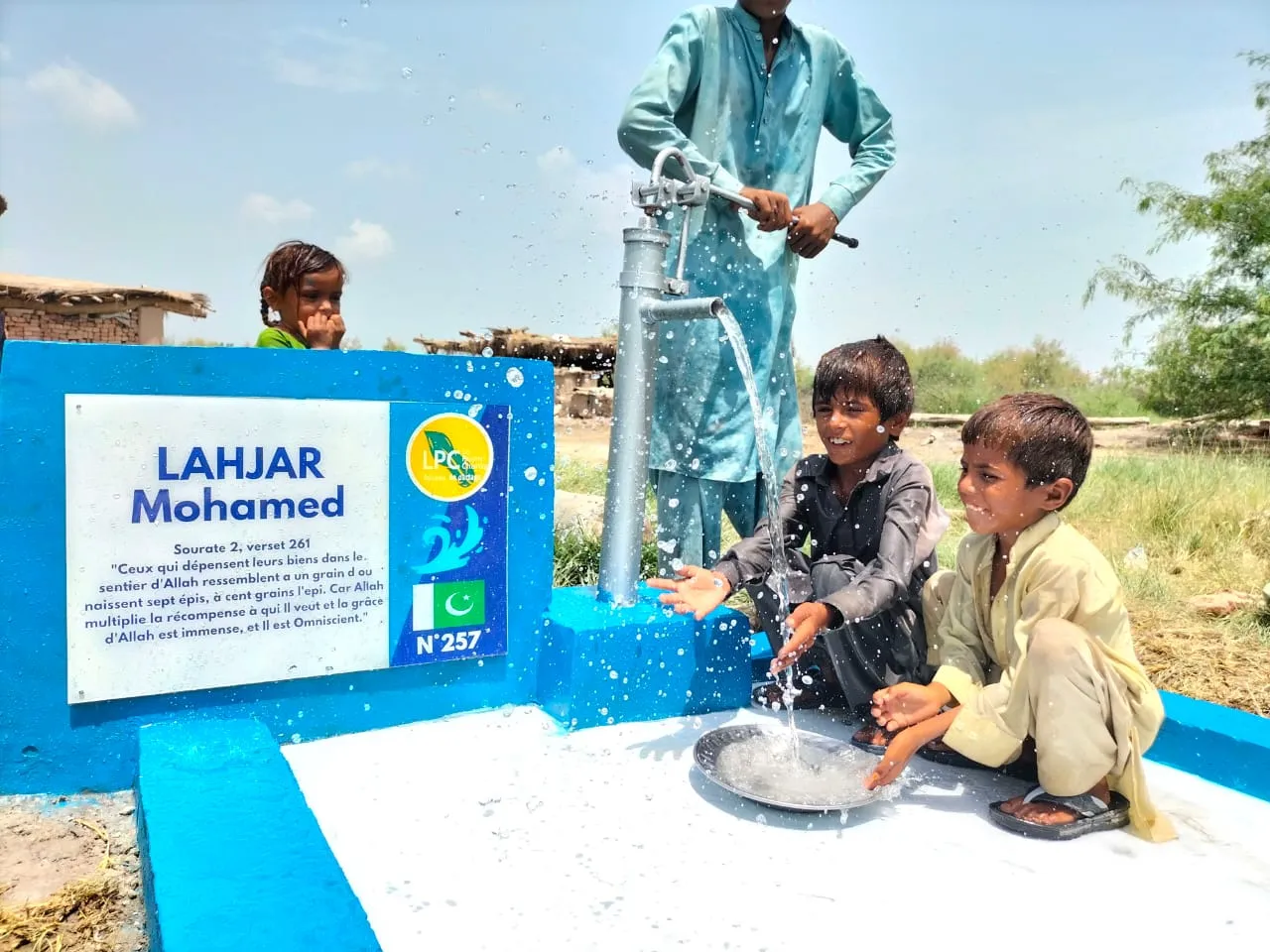
A water well. The example given to the Companions, and the one most often cited today. A hand-pump well in Pakistan serves up to 50 people for years and costs £195.
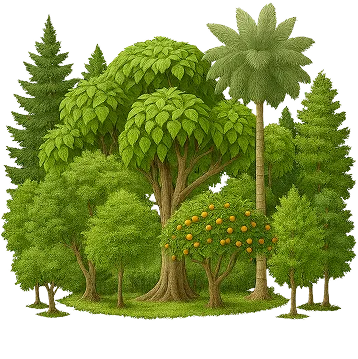
A fruit tree. “There is no Muslim who plants a tree or sows a field, and a human, a bird or an animal eats from it, but it is a charity for him” (Sahih al-Bukhari 2320). A fruit tree in Madagascar feeds a family for decades, from £28.
A copy of the Qur’an given to a mosque or a school: every recitation from it counts.
Teaching someone to read the Qur’an, or paying for a teacher: knowledge that keeps being passed on.
Contributing to a mosque, even a single brick or a prayer mat.
Building or equipping a school, or sponsoring a classroom.
A medical clinic or equipment that treats patients year after year.
Printing or publishing beneficial knowledge: books, courses, a website that teaches.
Raising a righteous child who prays for you: the third deed of the hadith, and the one most parents already have in hand.
Building a shelter or a home for a family or for travellers.
A waqf in the traditional sense: property or land whose income funds any of the above for generations.
Not everything good is a sadaqah jariyah. Feeding the poor, giving an iftar meal or sponsoring an orphan for a year are excellent deeds, but their benefit ends when the meal or the year ends. Scholars at IslamQA make this distinction explicitly: jariyah means the benefit itself continues.
One tree, decades of charity
A mango or guava tree in Madagascar bears fruit from the third year and keeps giving for forty. Every fruit eaten is counted (Sahih al-Bukhari 2320).
Which sadaqah jariyah is best?
When Sa’d ibn Ubadah’s mother died while he was away, he asked the Prophet ﷺ which charity was best to give on her behalf. The answer was water.
Hadith
Sa’d ibn Ubadah said: “O Messenger of Allah, Umm Sa’d has died; which charity is best?” He said: “Water.” So Sa’d dug a well and said: “This is for Umm Sa’d.”
Sunan Abi Dawud 1681, graded hasan by al-Albani. Also reported in Sunan an-Nasa’i 3664 and Sunan Ibn Majah 3684, with weaker chains.
Water comes first for a practical reason: nobody can do without it, and a well serves everyone who passes, every day, with no limit on who benefits. After water, scholars usually rank knowledge (teaching, Qur’an copies) and places of worship. The honest answer, though, is that the best sadaqah jariyah is the one that is actually built and actually used. A £195 well that pumps water for ten years does more good than a £5,000 project that never leaves the drawing board. We go into this in What is the best sadaqah jariyah?
Can you give sadaqah jariyah on behalf of someone else?
Yes. This is one of the clearest rulings in the field. A man came to the Prophet ﷺ and said his mother had died suddenly; he believed she would have given charity had she been able to speak. “Will she have a reward if I give charity on her behalf?” He said: “Yes” (Sahih al-Bukhari 1388, Sahih Muslim 1004). Sa’d ibn Ubadah’s well was for his mother. The four schools of law agree that the reward of a charity given on behalf of a deceased Muslim reaches them.
You can also give it for someone who is alive, as a gift: for a parent, a spouse, a friend who has just returned from umrah, a newborn. The name goes on the plaque, and the certificate can be sent to the person. We wrote a full guide to sadaqah jariyah for deceased parents, and to building a well in someone’s name.
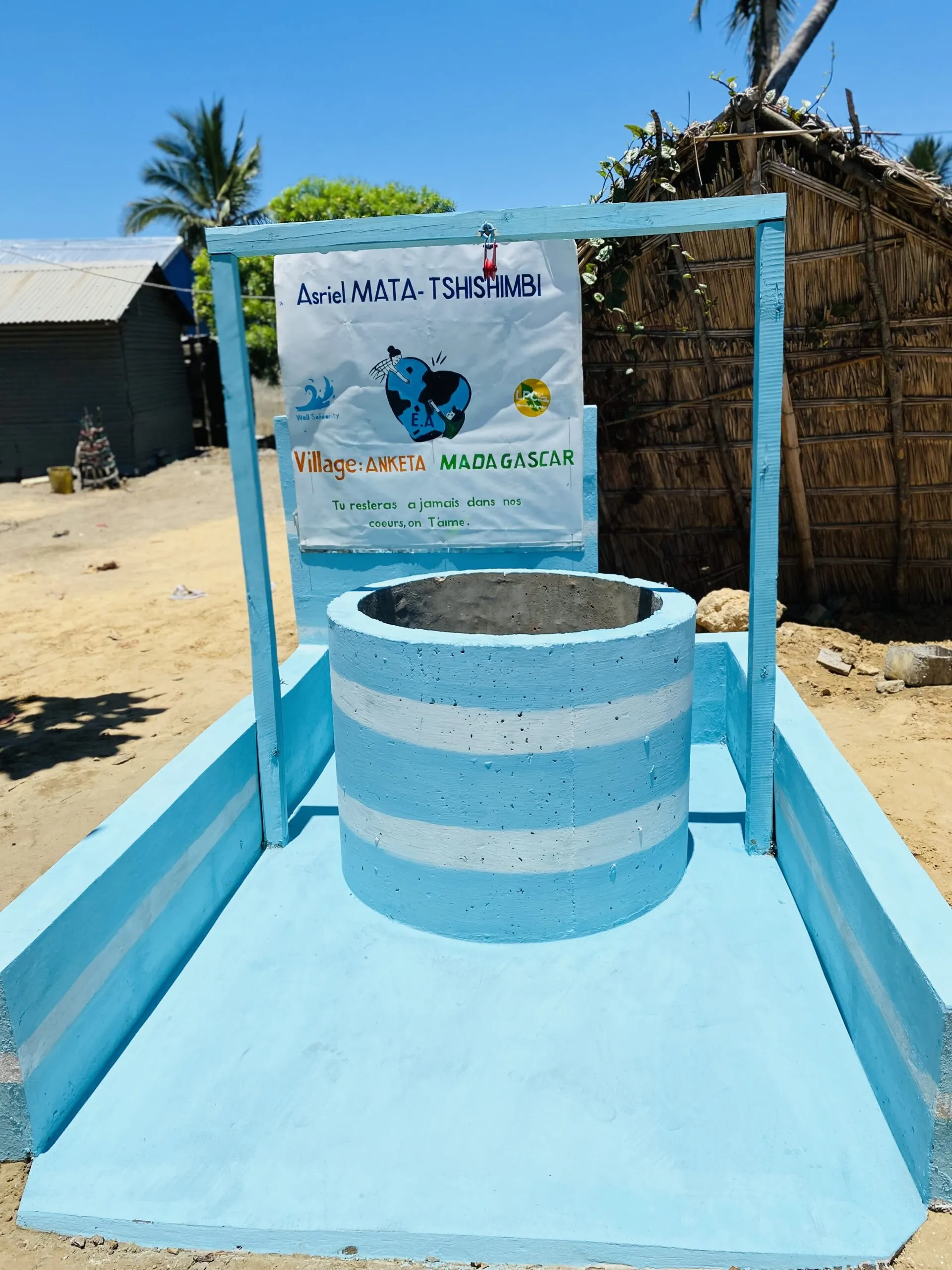
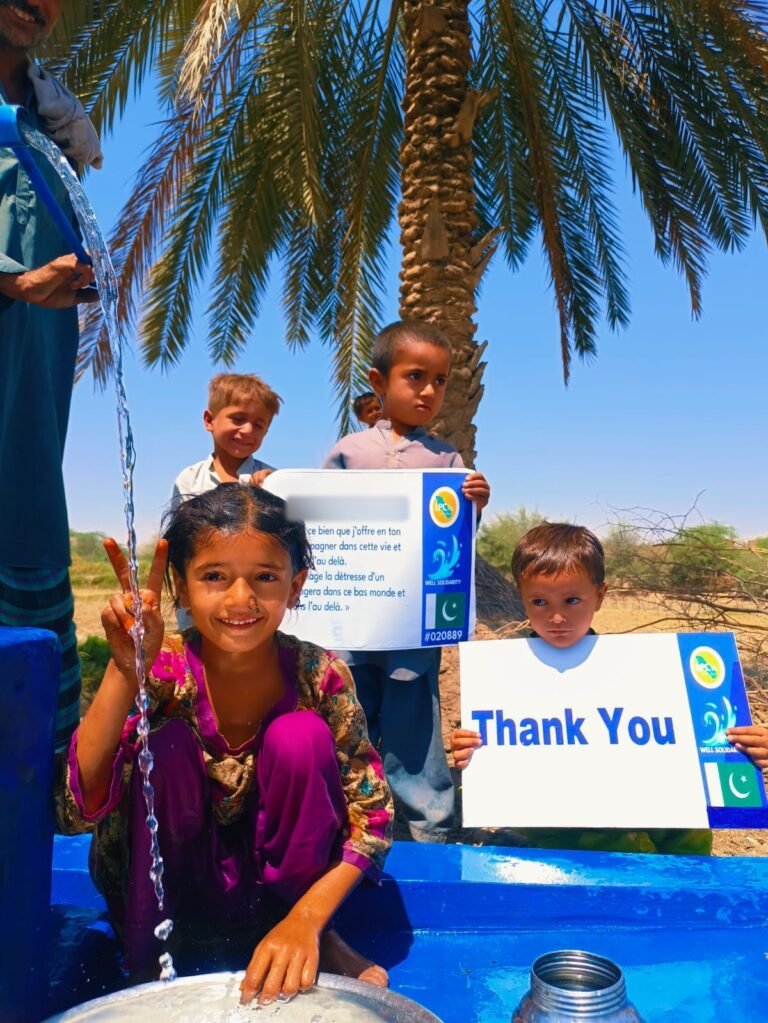
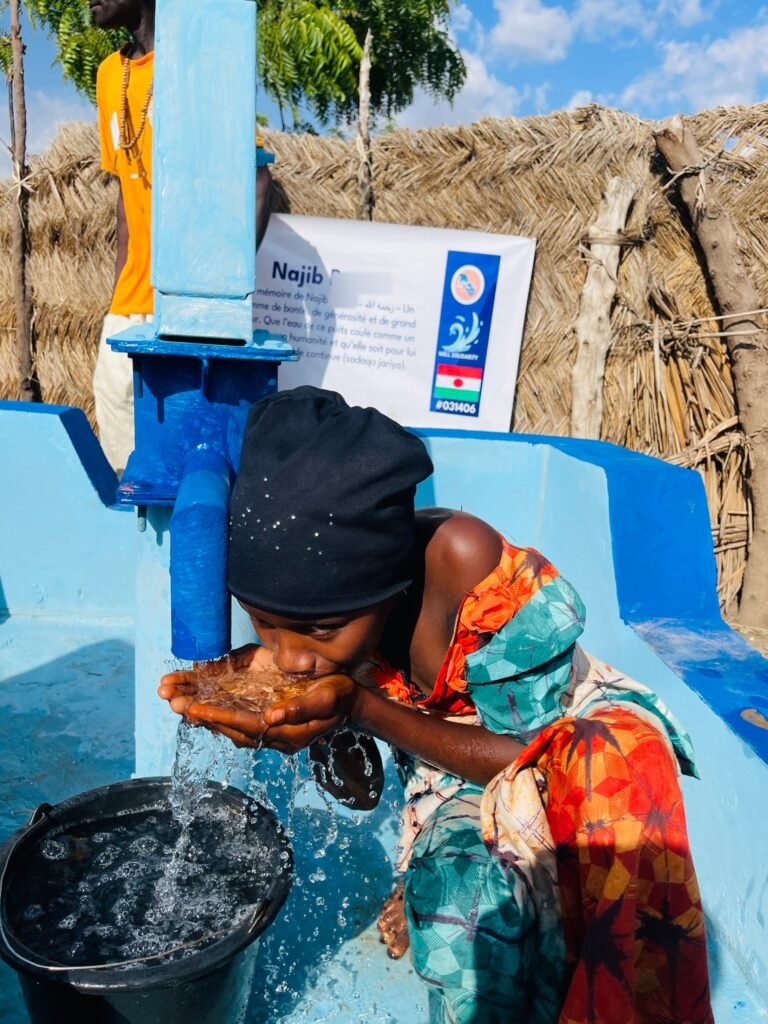
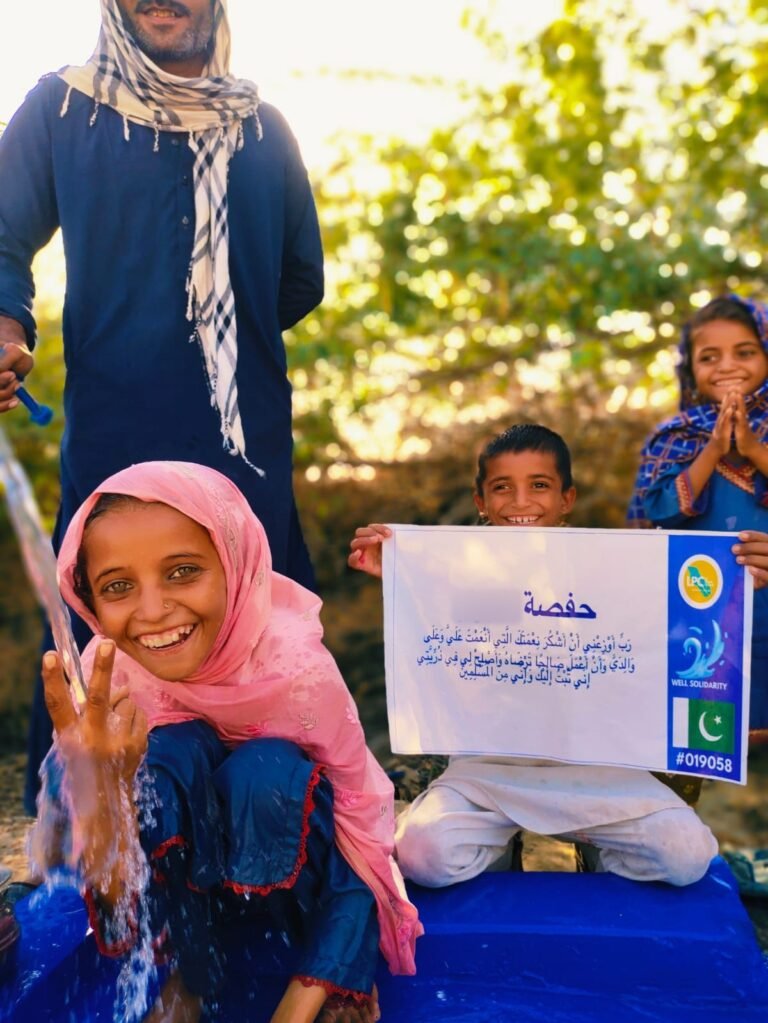
The thank-you photo sent with the GPS coordinates and the video.A well in Niger built in memory of someone who passed away: ‘may the water flow as an ongoing charity for him’.A plaque in Arabic: a dua of gratitude for one’s parents (Qur’an 46:15).
How to choose one that lasts
Pick a benefit that repeats by itself. Water, fruit, knowledge. Ask: who uses this next year, and the year after?
Ask where exactly, and for how many. A serious builder tells you the country, the region and the number of people served. Our wells go to Sindh in Pakistan and to rural Madagascar.
Ask for proof you can keep. GPS coordinates, photos, a video of the first water, and a plaque with the name. Without proof, you are trusting, not knowing.
Ask who maintains it. A hand pump needs a village that looks after it and a builder who comes back if it breaks. Ask about the guarantee.
Make the intention, then let it go. The verse that follows 2:261 warns against following the gift with reminders. Give it in their name, and move on.
What is the difference between sadaqah and sadaqah jariyah?
Sadaqah is any voluntary charity; its benefit is usually immediate and finite, like a meal. Sadaqah jariyah is a charity whose benefit continues over time, like a well or a tree, so the reward continues as well. Every sadaqah jariyah is a sadaqah, but not every sadaqah is jariyah.
Is there a minimum amount for sadaqah jariyah?
No. A single copy of the Qur’an, a share in a well or one fruit tree for £28 all count. What makes it jariyah is that the benefit lasts, not the amount.
Can I give sadaqah jariyah on behalf of a deceased person?
Yes. The Prophet ﷺ confirmed that charity given on behalf of a deceased mother reaches her (Sahih al-Bukhari 1388), and Sa’d ibn Ubadah dug a well for his mother on the Prophet’s advice (Abu Dawud 1681). Write the person’s name when you order and it goes on the plaque.
Does sadaqah jariyah count if I buy it from a company rather than a charity?
The deed is the well or the tree, and the intention is yours. Whether the builder is a charity or a company changes who does the work and how it is proven, not the charity itself. Well & Trees is a company: you pay a fixed price, we build, and we send you the proof. We take a margin and say so.
Is a water well zakat?
Not in the usual sense. Zakat is obligatory and must reach specific categories of people (Qur’an 9:60); most scholars do not accept construction projects as zakat. A well is sadaqah, voluntary charity. We do not accept zakat and do not describe our wells as zakat-eligible. See sadaqah vs zakat.
Which sadaqah jariyah is best for parents?
Water, following the answer given to Sa’d ibn Ubadah. A well in your parents’ names serves a village every day and carries their names on the plaque. A fruit tree is the smaller alternative. Read our guide to sadaqah jariyah for deceased parents.
Sources
Sahih Muslim 1631; Sunan an-Nasa’i 3651; Sunan Abi Dawud 2880 (the three deeds that continue).
Sunan Abi Dawud 1681, hasan (al-Albani); Sunan an-Nasa’i 3664 and Sunan Ibn Majah 3684, weaker chains (the well of Sa’d ibn Ubadah).
Sahih al-Bukhari 1388; Sahih Muslim 1004 (charity on behalf of a deceased mother).