💧 Give a well in the name of a loved one: a gift that flows forever.
🌳 Plant a tree today and reap rewards for eternity.
🎁 Looking for an unforgettable gift? Give a sadaqah jariyah in your parents’ name.
📖 “The best charity is giving water to drink.” (Narrated by Abu Dawud)
📖 “Charity never decreases wealth.” (Muslim)
📖 “Whoever plants a tree will be rewarded for every creature that benefits from it.” (Bukhari and Muslim)
When a parent dies, the question comes almost immediately: what can I still do for them? Islam gives a clear answer. Charity given on their behalf reaches them, and an ongoing charity keeps reaching them. Here are eight ways to give sadaqah jariyah for a mother or a father who has passed away, with the texts behind each one and what it costs.
In short
Charity on behalf of a deceased parent is rewarded to them: the Prophet ﷺ said “yes” to a son who asked (Sahih al-Bukhari 1388).
Sa’d ibn Ubadah dug a well for his mother on the Prophet’s advice: water is the first recommendation (Abu Dawud 1681).
Dua and istighfar for your parents are themselves a continuing deed: the third of the three (Sahih Muslim 1631).
The eight ways below go from £28 to a village well.
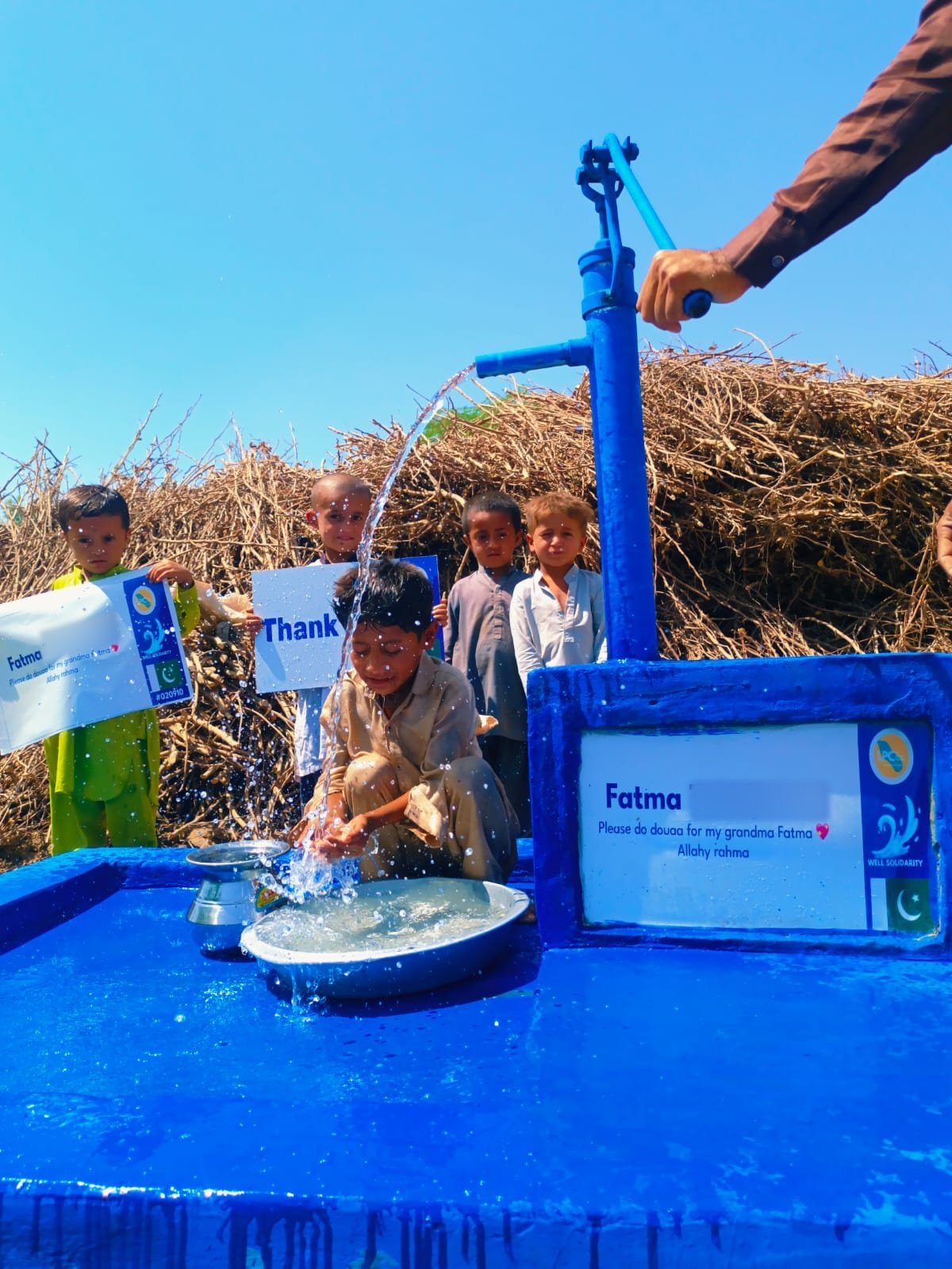
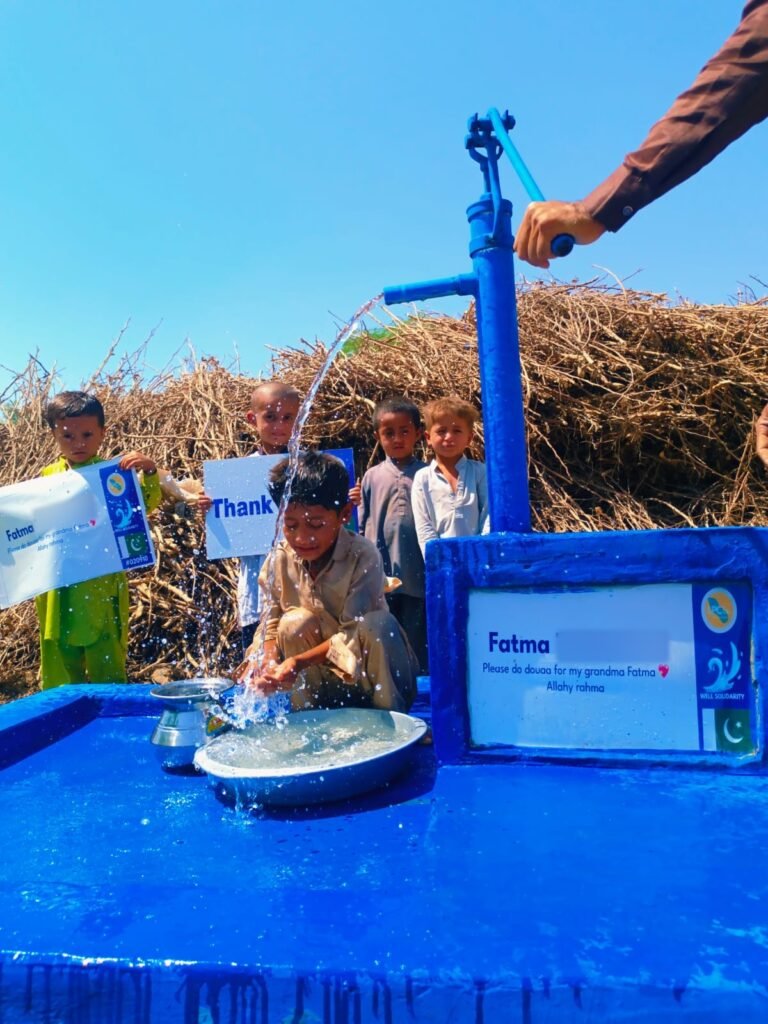
‘Please do dua for my grandma’: a well built in memory of a grandmother.
Does the reward reach them?
Yes. The ruling is agreed upon by the four schools of law, on the basis of several hadiths.
Hadith
A man said to the Prophet ﷺ: “My mother died suddenly, and I think that if she had been able to speak she would have given charity. Will she have a reward if I give charity on her behalf?” He said: “Yes.”
Sahih al-Bukhari 1388, Sahih Muslim 1004, narrated by A’ishah.
In another narration, Sa’d ibn Ubadah’s mother died while he was away with the Prophet ﷺ. He asked whether it would benefit her if he gave charity on her behalf; the Prophet ﷺ said yes, and Sa’d gave his garden, called al-Mikhraf, as charity for her (Sahih al-Bukhari 2756). Then he asked which charity was best, and was told: water (Abu Dawud 1681). So the deed can be anything, and the best of it is a well.
The three deeds that continue after death
Sahih Muslim 1631. A well or a tree is the first one; a child who prays for you is the third.
Eight ways to give sadaqah jariyah for a deceased parent
1. A water well in their name
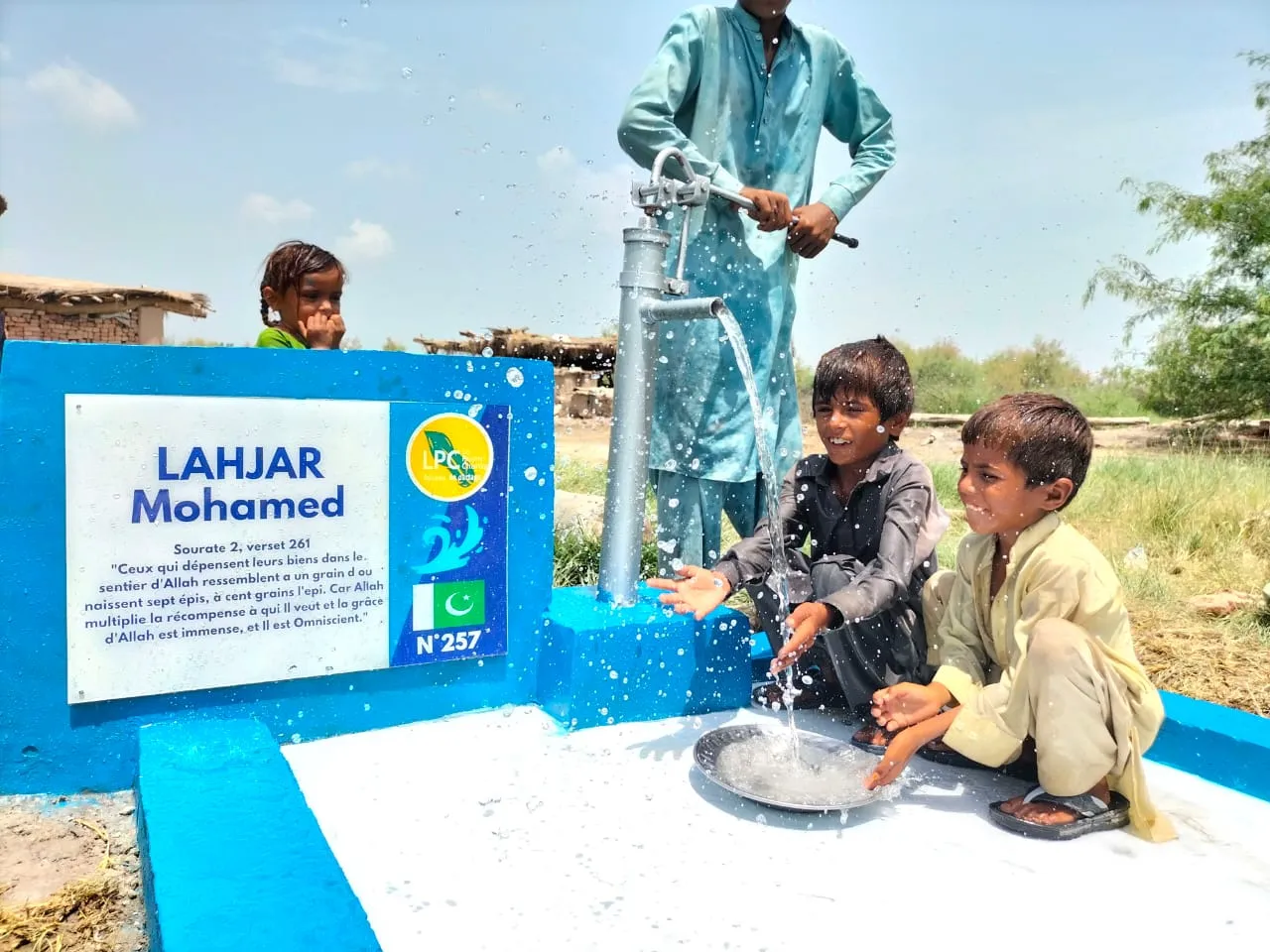
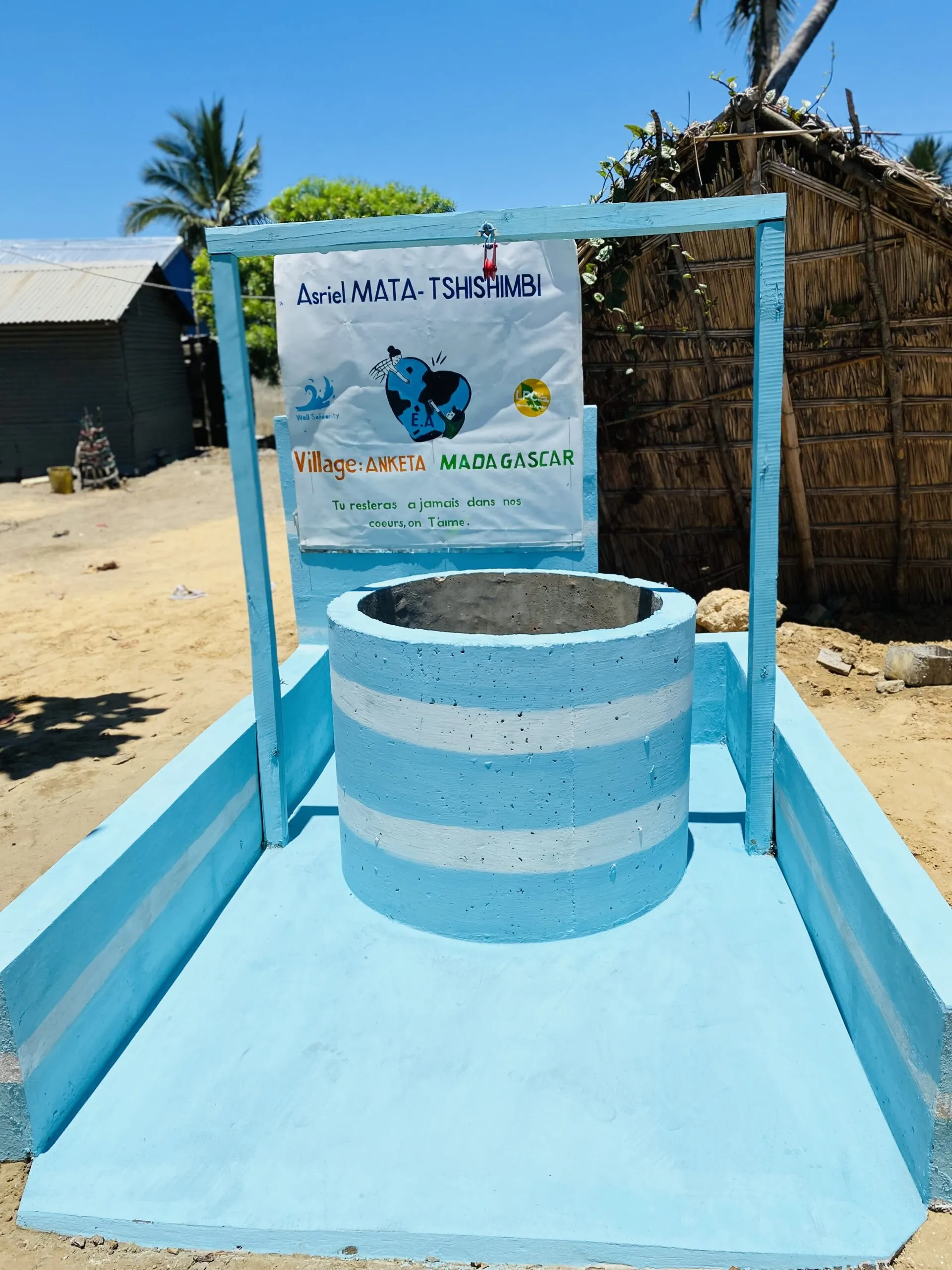
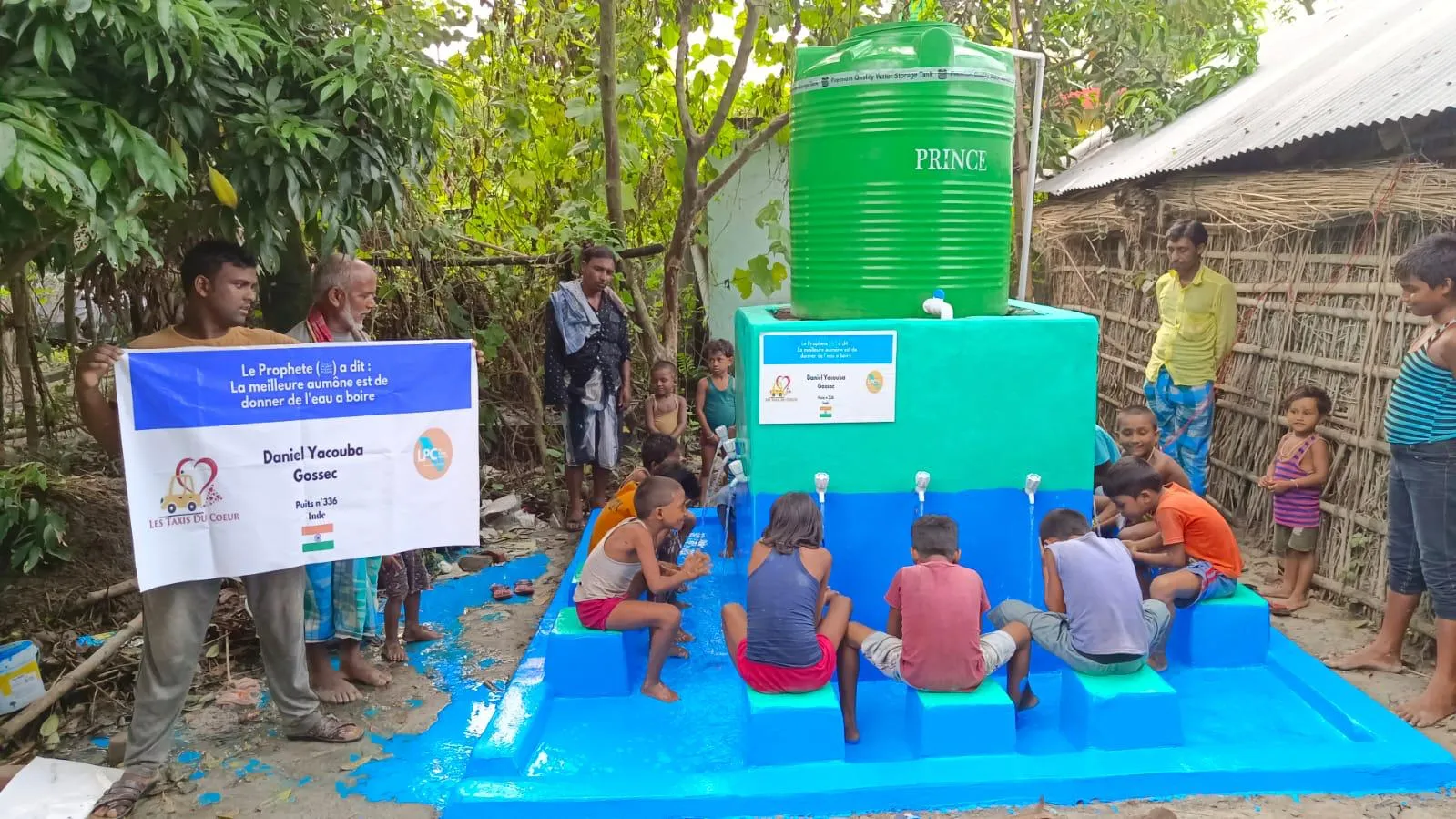
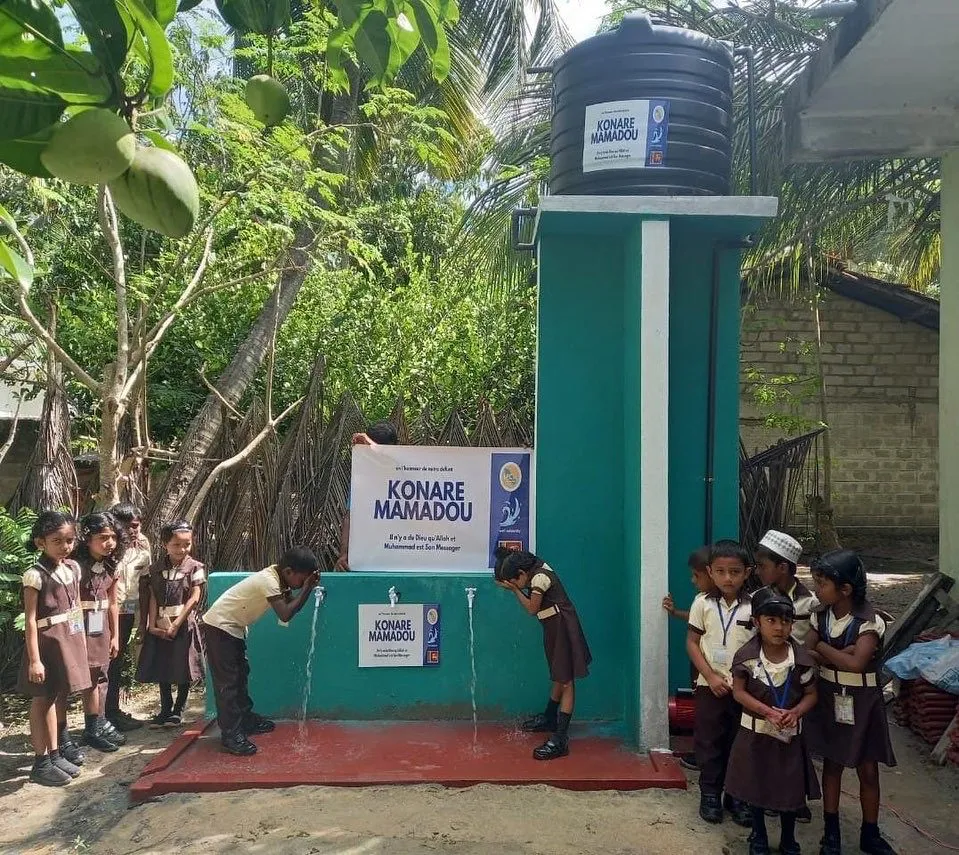
The first recommendation, and the most common choice. A hand-pump well in Pakistan serves up to 50 people every day for years; the plaque carries your parent’s name, and you receive the GPS coordinates, the photos and a video of the first water. £195, built in about 3 months. Brothers and sisters often share one, or order a village well in Madagascar for £875 with several names on the plaque.
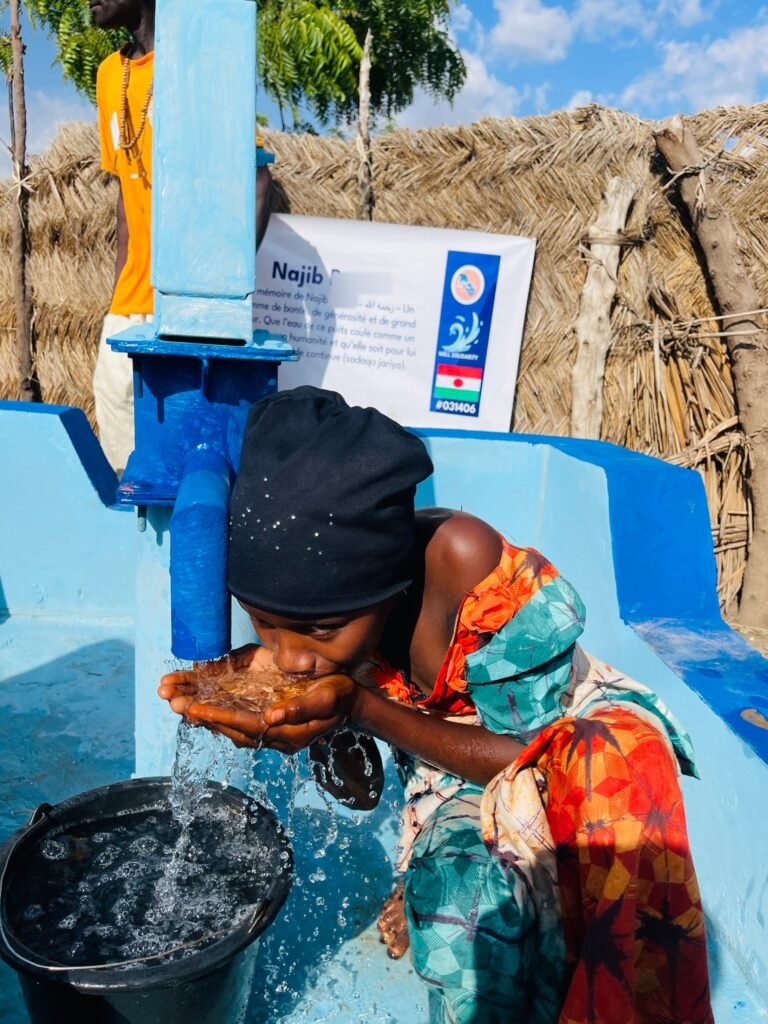
A well in Niger built in memory of someone who passed away: ‘may the water flow as an ongoing charity for him’.
Built in memory of Najib
A well in Niger built in memory of a man who passed away. The plaque, written by his family, asks that the water flow as an ongoing charity for him. Every child who drinks is counted.
2. A fruit tree planted for them
“There is no Muslim who plants a tree or sows a field, and a human, a bird or an animal eats from it, but it is a charity for him” (Sahih al-Bukhari 2320). A fruit tree in Madagascar feeds a family for decades, with a plaque in your parent’s name and a photo of the planting. From £28, which makes it the right choice for a first deed, or for each grandchild to give one.
One tree, decades of charity
A mango or guava tree in Madagascar bears fruit from the third year and keeps giving for forty. Every fruit eaten is counted (Sahih al-Bukhari 2320).
3. Dua and seeking forgiveness for them
This one costs nothing and is named in the hadith itself: “a righteous child who prays for them”. The Prophet ﷺ said that a person’s rank is raised in Paradise and he asks, “How did I get this?”, and is told: “By your child’s seeking forgiveness for you” (Sunan Ibn Majah 3660, graded hasan). Make it a habit: after every prayer, Rabbi ighfir li wa li-walidayya, “My Lord, forgive me and my parents” (Qur’an 71:28). We collected the authentic duas in Dua for the deceased.
Qur’an
رَّبِّ ارْحَمْهُمَا كَمَا رَبَّيَانِي صَغِيرًا
“My Lord, have mercy upon them as they brought me up when I was small.”
Surah al-Isra, 17:24
4. Copies of the Qur’an given in their name
A mushaf placed in a mosque or a school is read for years; every recitation from it is a charity for the one who gave it. Local mosques and Islamic schools in Pakistan, Bangladesh and the UK accept them. Write your parent’s name inside the cover.
5. A contribution to a mosque or a prayer space
“Whoever builds a mosque for Allah, Allah builds for him a house in Paradise” (Sahih al-Bukhari 450, Sahih Muslim 533). Few people can build a whole mosque, but a share in one, a carpet, a water point for wudu or the maintenance of an existing mosque all fall under the same deed.
6. Paying off their debts and fulfilling their vows
Not a sadaqah jariyah strictly speaking, but the first thing to do, before any charity. The Prophet ﷺ delayed the funeral prayer of a man who had an unpaid debt until a Companion took it on (Sahih al-Bukhari 2295). If your parent owed money, had an unfulfilled vow, or missed obligatory hajj while able, settling these comes first. Scholars also allow hajj and umrah to be performed on behalf of a deceased parent by someone who has already done their own.
7. Knowledge that keeps teaching
Sponsoring a Qur’an teacher, a student, or a classroom; printing beneficial books; funding a course. “Knowledge that benefits others” is the second of the three deeds. The benefit multiplies with every student.
8. Continuing a good habit they had
If your mother fed the neighbours every Ramadan, keep feeding them in her name. If your father gave to a particular cause, keep giving. The Prophet ﷺ taught that among the best acts of righteousness towards parents after their death is to honour their friends and keep their ties (Sahih Muslim 2552). This is not jariyah by itself, but it keeps their name and their deeds alive, and it is where many families find peace.
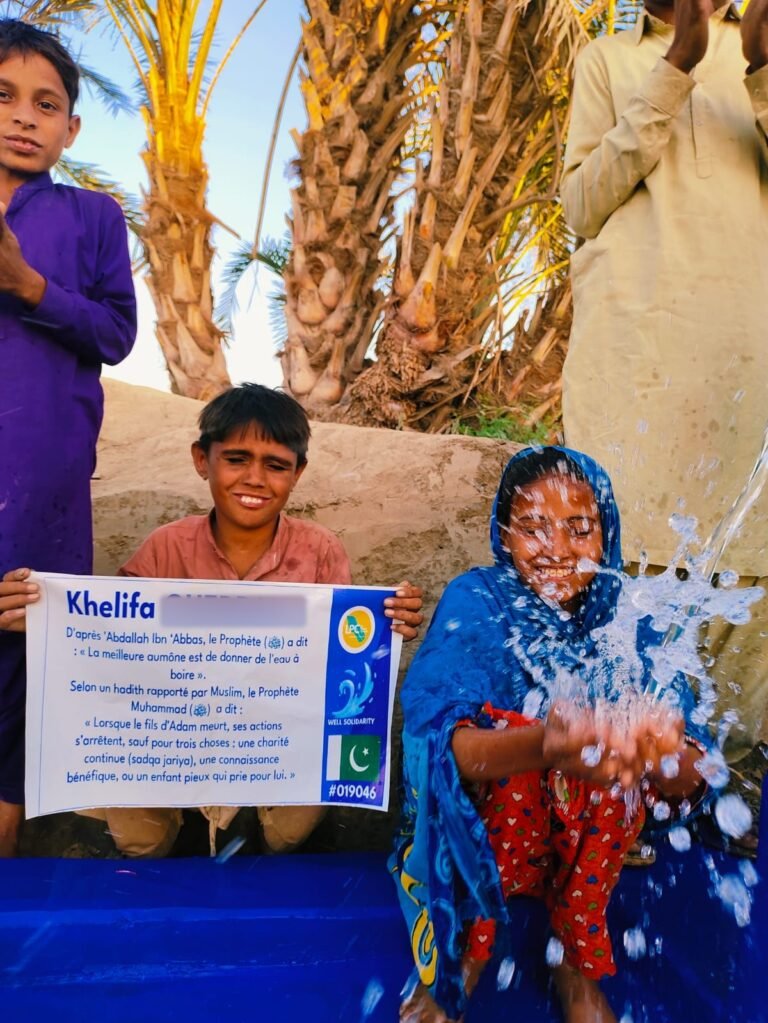
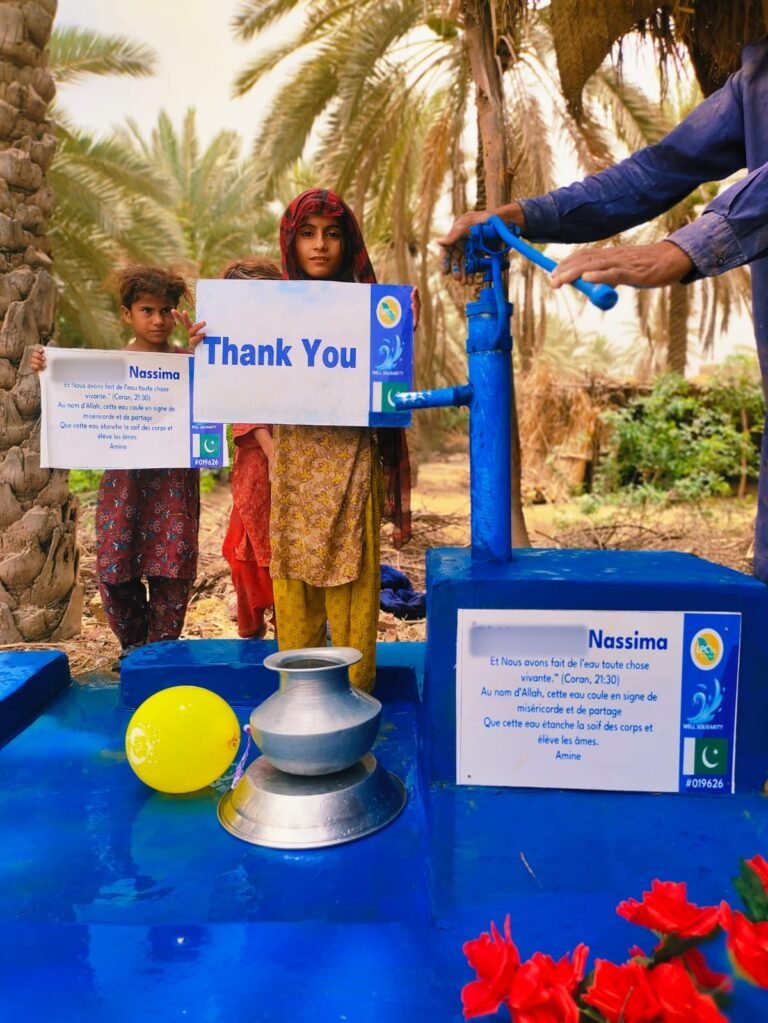
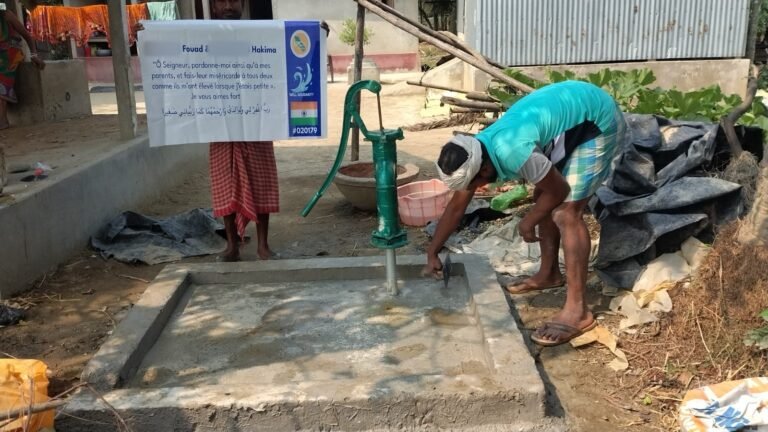
Some customers write a hadith on the plaque: here, the hadith of the three deeds that continue after death.‘And We made from water every living thing’ (Qur’an 21:30), on the plaque of a well in Sindh.Finishing the platform. The plaque carries the Qur’anic dua for parents, in French and Arabic, chosen by the customer.
Which one should you choose?
Start with what you can do today, and do the well when you can. In practice, most families do three things in the first weeks: the debts and the funeral, then dua every day, then one visible sadaqah jariyah. If the budget is £28, plant a tree. If it is £195, build a well in Pakistan. If brothers and sisters are putting money together, build a village well with every name on the plaque.
What about a parent who was not Muslim?
Scholars differ on whether charity benefits a non-Muslim after death, and most hold that it does not reach them as reward in the same way. But you can still give charity out of gratitude for them, be good to their family and friends, and honour their memory. Several of our customers plant a tree “in memory” of a non-Muslim parent as a living tribute, without the religious framing. See Plant a tree in memory of someone.
Does the deceased benefit from charity given on their behalf?
Yes. The Prophet ﷺ said “yes” to a son asking about charity for his mother who had died suddenly (Sahih al-Bukhari 1388), and advised Sa’d ibn Ubadah to give water for his mother (Abu Dawud 1681). The four schools agree the reward reaches a deceased Muslim.
What is the best sadaqah jariyah for deceased parents?
Water, following the answer given to Sa’d ibn Ubadah. A well in their name serves a village every day; a fruit tree is the smaller option. Dua and istighfar cost nothing and are named in the hadith of the three deeds.
Can I put both my parents’ names on one well?
Yes. The plaque of a hand-pump well carries one or two names; the plaque of a village well can carry several. Write the names in the order form.
How soon after the death should I give the charity?
There is no deadline. Many families give in the first forty days, others on the anniversary, others every Ramadan. The reward reaches the deceased whenever it is given.
Can I give sadaqah jariyah for a parent who is still alive?
Yes, and it is a beautiful gift. Build the well or plant the tree in their name, give them the certificate, and they see the video of their own well while they are alive.
Does giving on behalf of my parents reduce my own reward?
No. You are rewarded for the charity and for your goodness to your parents, and they are rewarded for the deed itself. Both benefit.
Sources
Sahih al-Bukhari 1388; Sahih Muslim 1004 (charity for a mother who died suddenly).
Sahih al-Bukhari 2756, narrated by Ibn Abbas (Sa’d gives his garden for his mother); Sunan Abi Dawud 1681 (water is best).
Sahih Muslim 1631 (the three deeds); Sunan Ibn Majah 3660 (rank raised by a child’s istighfar).
Sahih al-Bukhari 2320 (planting a tree); Sahih al-Bukhari 450 (building a mosque); Sahih al-Bukhari 2295 (debt before the funeral prayer); Sahih Muslim 2552 (honouring parents’ friends).