💧 Give a well in the name of a loved one: a gift that flows forever.
🌳 Plant a tree today and reap rewards for eternity.
🎁 Looking for an unforgettable gift? Give a sadaqah jariyah in your parents’ name.
📖 “The best charity is giving water to drink.” (Narrated by Abu Dawud)
📖 “Charity never decreases wealth.” (Muslim)
📖 “Whoever plants a tree will be rewarded for every creature that benefits from it.” (Bukhari and Muslim)
Dua is the first thing you can do for someone who has died, and the one that never stops. Here are ten authentic duas for the deceased, from the moment you hear the news to the years after, each with the Arabic, a transliteration, the meaning and the source. At the end, the one deed the Prophet ﷺ recommended to go with the dua.
In short
A righteous child who prays for a parent is one of the three deeds that continue after death (Sahih Muslim 1631).
The duas below come from Sahih Muslim, Abu Dawud, Tirmidhi, Ibn Majah and the Qur’an. No invented wording.
Say them in Arabic if you can, in your own language if you cannot. Allah hears both.
Pair the dua with a charity in their name: water was the Prophet’s recommendation (Abu Dawud 1681).
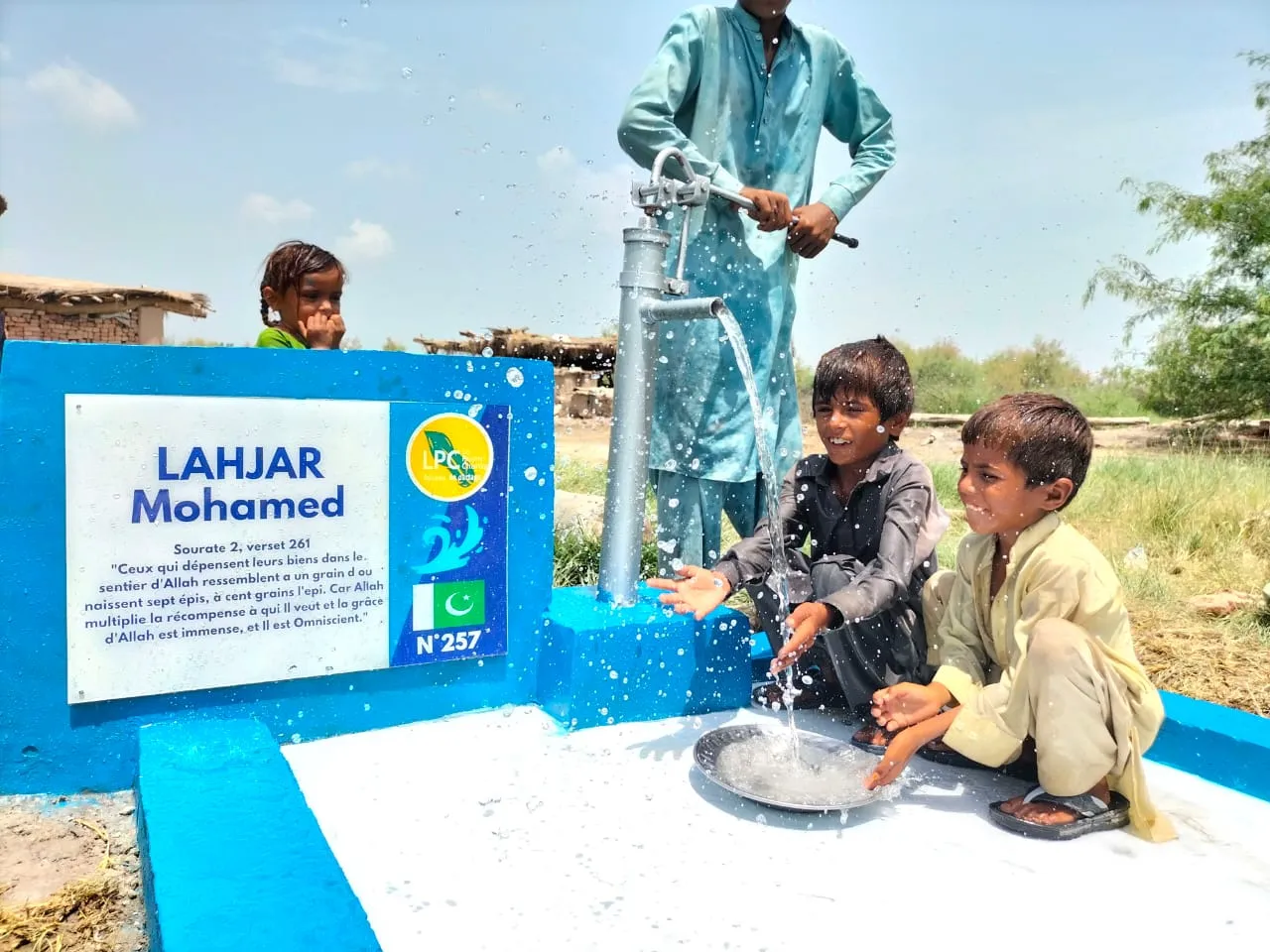
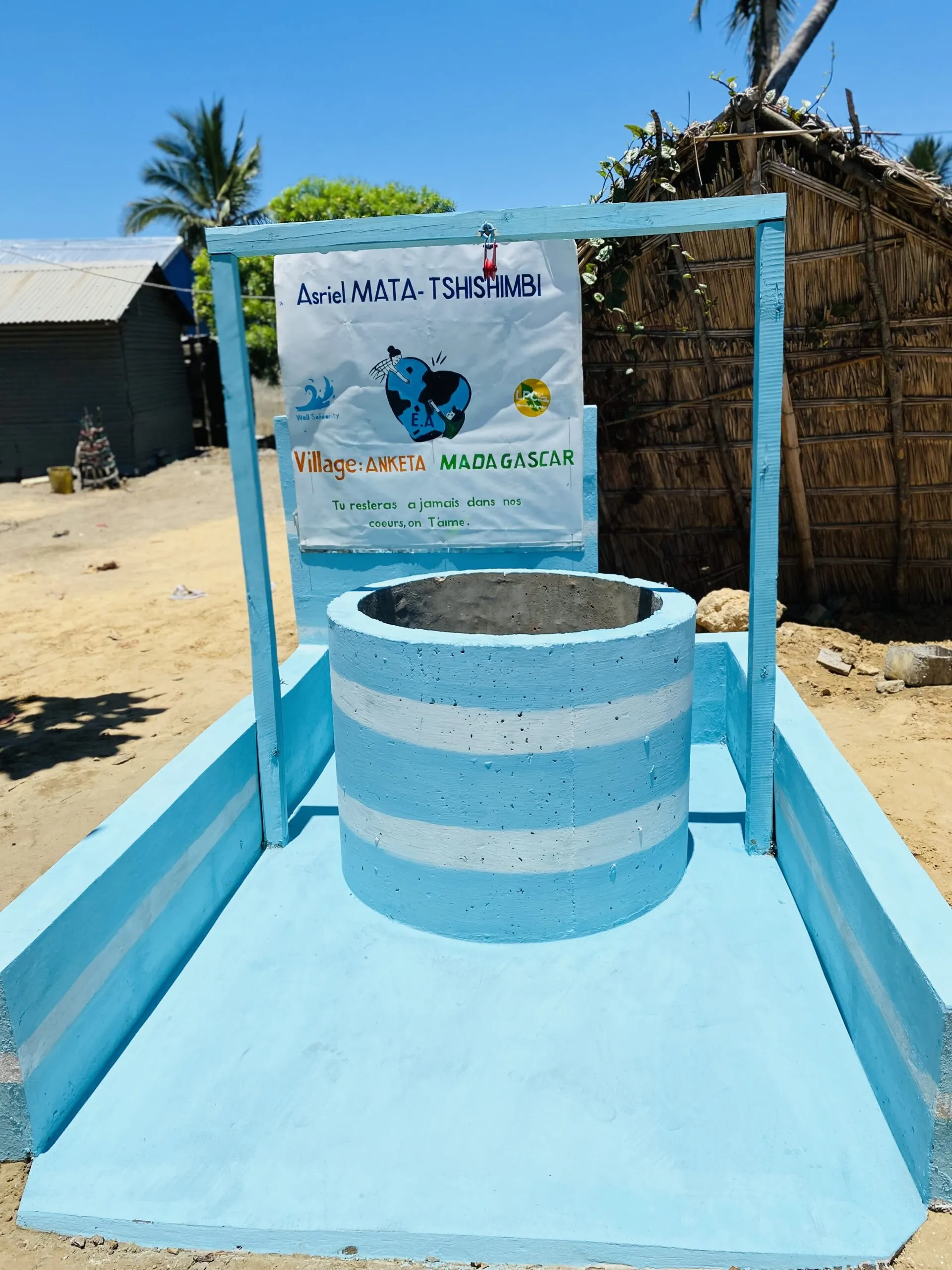
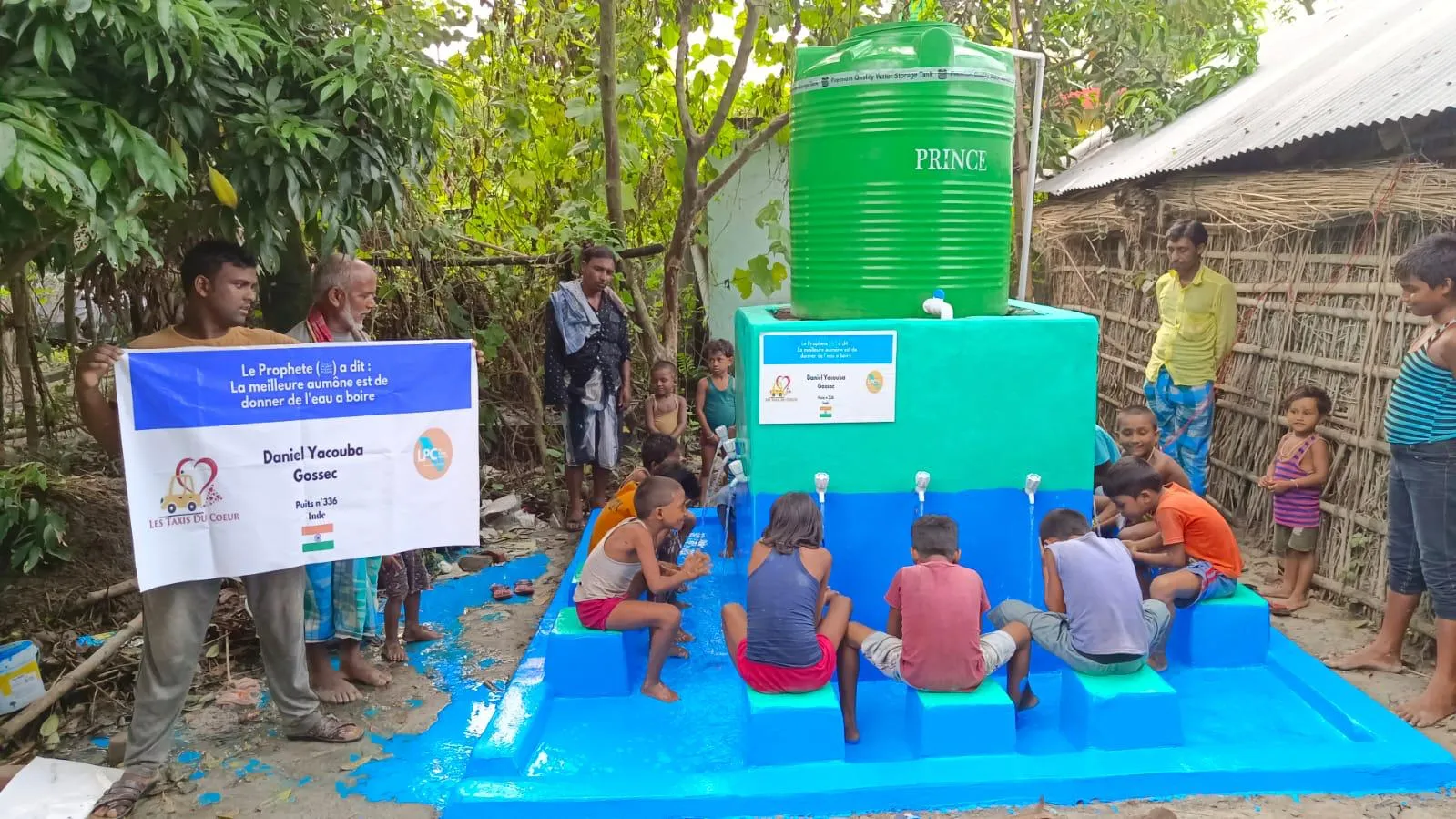
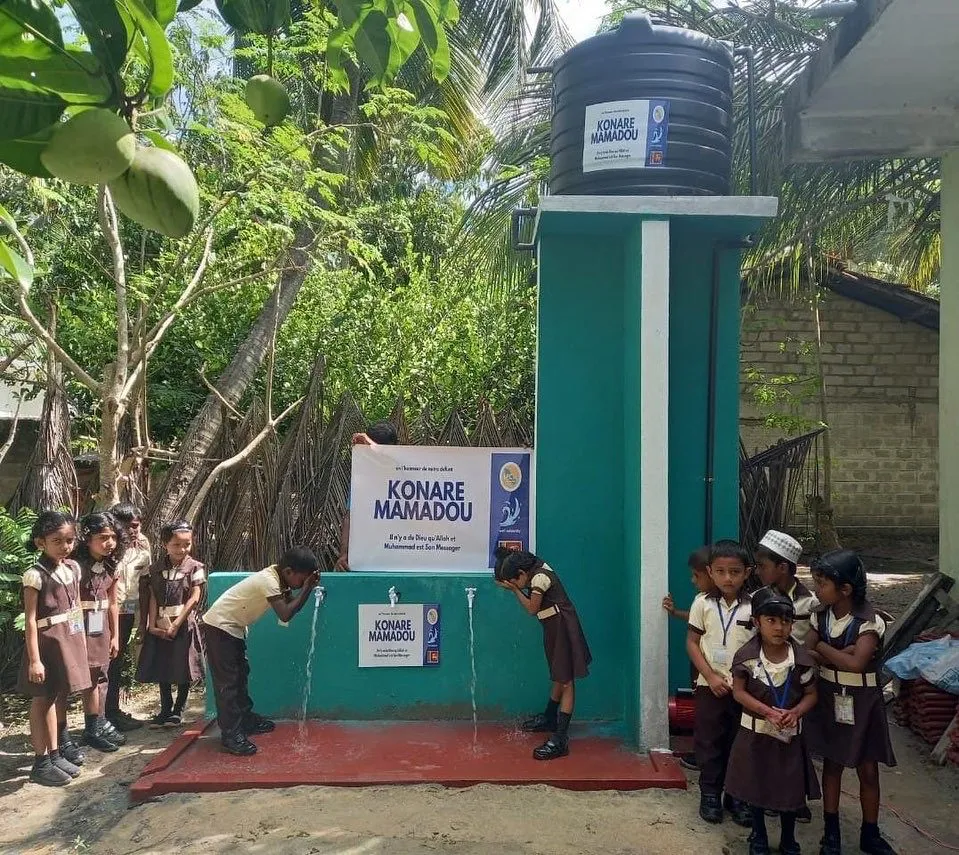
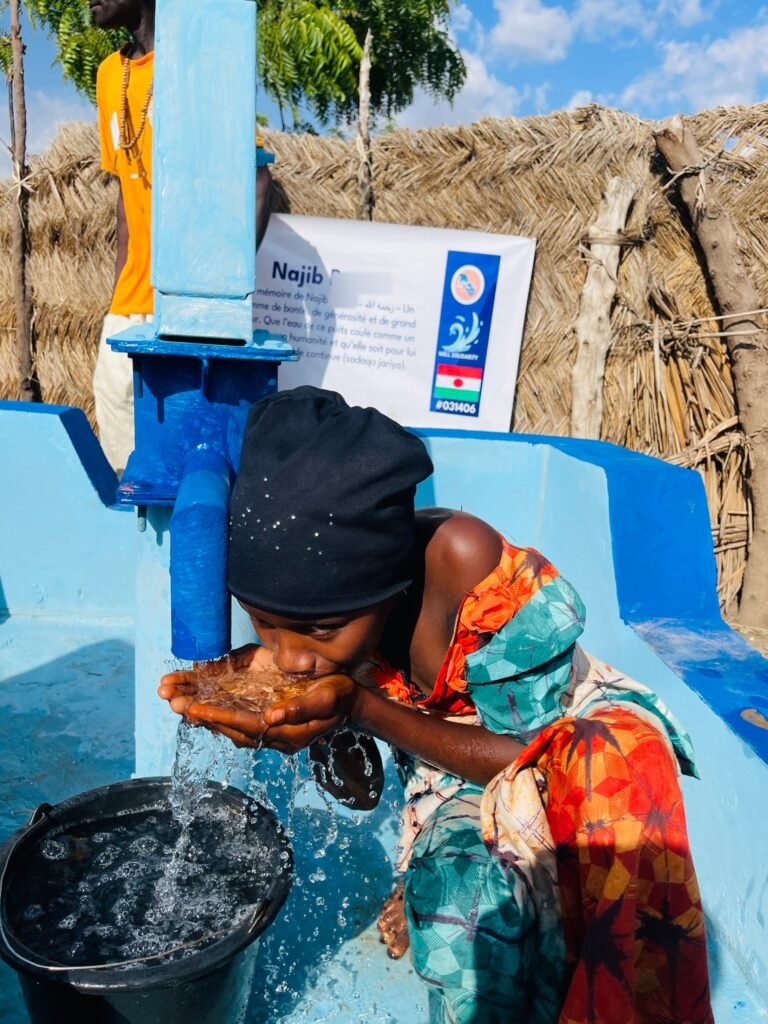
A well in Niger built in memory of someone who passed away: ‘may the water flow as an ongoing charity for him’.
Inna lillahi wa inna ilayhi raji’un. Allahumma ajurni fi musibati wa akhlif li khayran minha. “To Allah we belong and to Him we return. O Allah, reward me in my affliction and give me something better in its place.”
Qur’an 2:156 and Sahih Muslim 918, taught by the Prophet ﷺ to Umm Salamah.
Allahumma ighfir lahu warhamhu wa ‘afihi wa’fu ‘anhu, wa akrim nuzulahu, wa wassi’ mudkhalahu, waghsilhu bil-ma’i wath-thalji wal-barad, wa naqqihi minal-khataya kama naqqayta ath-thawbal-abyada minad-danas, wa abdilhu daran khayran min darihi, wa ahlan khayran min ahlihi, wa zawjan khayran min zawjihi, wa adkhilhul-jannah, wa a’idhhu min ‘adhabil-qabri wa ‘adhabin-nar. “O Allah, forgive him, have mercy on him, grant him well-being and pardon him. Honour his arrival and widen his place of entry. Wash him with water, snow and hail, and cleanse him of sins as a white garment is cleansed of dirt. Give him a home better than his home, a family better than his family and a spouse better than his spouse. Admit him to Paradise and protect him from the punishment of the grave and the punishment of the Fire.”
Sahih Muslim 963, narrated by Awf ibn Malik, who said: “I wished I had been that deceased person.” For a woman, replace -hu with -ha.
Allahumma ighfir li-hayyina wa mayyitina wa shahidina wa gha’ibina wa saghirina wa kabirina wa dhakarina wa unthana. Allahumma man ahyaytahu minna fa-ahyihi ‘alal-islam, wa man tawaffaytahu minna fa-tawaffahu ‘alal-iman. “O Allah, forgive our living and our dead, those present and those absent, our young and our old, our males and our females. O Allah, whomever You keep alive among us, keep him alive upon Islam, and whomever You take from us, take him upon faith.”
Sunan Abi Dawud 3201, Jami’ at-Tirmidhi 1024, Sunan Ibn Majah 1498. Graded sahih by al-Albani.
Allahumma inna [name] fi dhimmatika wa habli jiwarika, fa-qihi min fitnatil-qabri wa ‘adhabin-nar, wa anta ahlul-wafa’i wal-haqq, faghfir lahu warhamhu, innaka antal-ghafurur-rahim. “O Allah, [name] is under Your protection and in the rope of Your security, so guard him from the trial of the grave and the punishment of the Fire. You are the One who keeps promises and the Truth. Forgive him and have mercy on him; You are the Forgiving, the Merciful.”
Sunan Abi Dawud 3202, Sunan Ibn Majah 1499. Graded sahih by al-Albani.
5. After the burial
Dua
اللَّهُمَّ اغْفِرْ لَهُ، اللَّهُمَّ ثَبِّتْهُ
Allahumma ighfir lahu. Allahumma thabbithu. “O Allah, forgive him. O Allah, make him steadfast.”
Sunan Abi Dawud 3221. The Prophet ﷺ would stand at the grave after burial and say: “Seek forgiveness for your brother and ask that he be made steadfast, for he is now being questioned.” Graded sahih by al-Albani.
Assalamu ‘alaykum ahlad-diyari minal-mu’minina wal-muslimin, wa inna in sha’ Allahu bikum lahiqun, as’alullaha lana wa lakumul-‘afiyah. “Peace be upon you, people of these dwellings, believers and Muslims. We will, if Allah wills, join you. I ask Allah for well-being for us and for you.”
Rabbana ighfir lana wa li-ikhwaninal-ladhina sabaquna bil-iman wa la taj’al fi qulubina ghillan lil-ladhina amanu, Rabbana innaka ra’ufur-rahim. “Our Lord, forgive us and our brothers who preceded us in faith, and put not in our hearts any resentment towards those who have believed. Our Lord, You are Kind and Merciful.”
Surah al-Hashr, 59:10
8. For your parents
Qur’an
رَّبِّ ارْحَمْهُمَا كَمَا رَبَّيَانِي صَغِيرًا
Rabbi irhamhuma kama rabbayani saghira. “My Lord, have mercy upon them as they brought me up when I was small.”
Surah al-Isra, 17:24. The Prophet ﷺ said a person’s rank in Paradise is raised “by your child’s seeking forgiveness for you” (Sunan Ibn Majah 3660, hasan).
Rabbana ighfir li wa li-walidayya wa lil-mu’minina yawma yaqumul-hisab. “Our Lord, forgive me and my parents and the believers on the Day the account is established.”
Rabbi ighfir li wa li-walidayya wa liman dakhala baytiya mu’minan wa lil-mu’minina wal-mu’minat. “My Lord, forgive me and my parents and whoever enters my house as a believer, and the believing men and believing women.”
Surah Nuh, 71:28
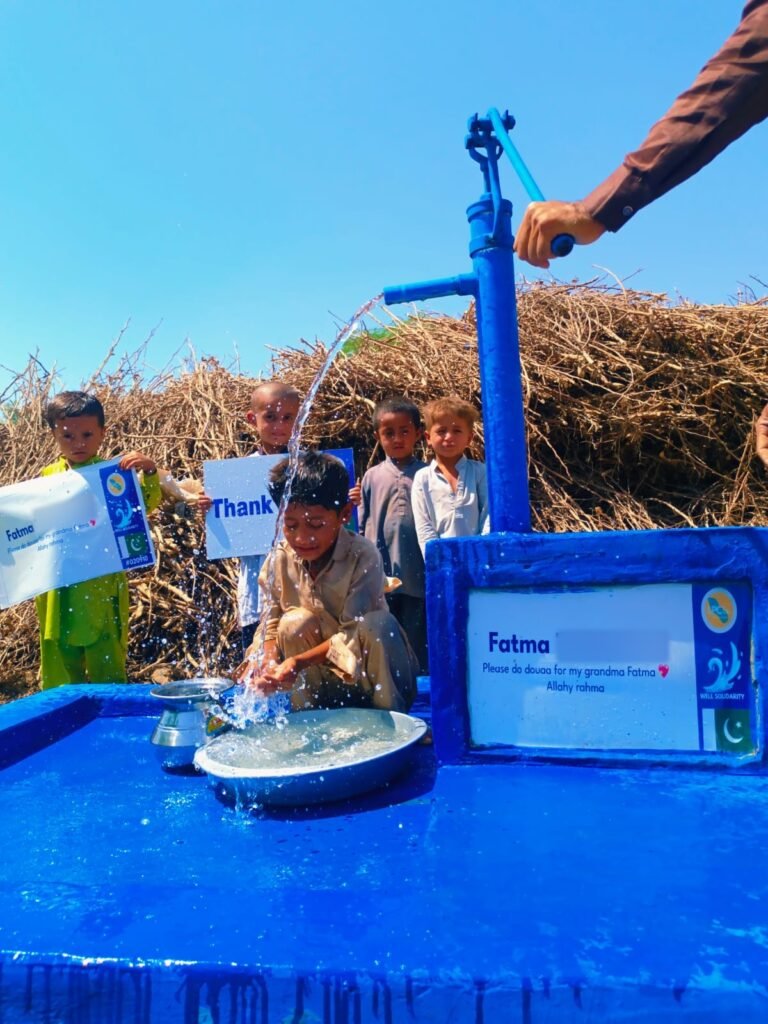
‘Please do dua for my grandma’: a well built in memory of a grandmother.
A well that asks for dua
The dua and the deed go together. This well was built in memory of a grandmother; the plaque asks everyone who reads it to pray for her. The water does the rest.
The deed that goes with the dua
Dua is the first of the two things a child can keep doing for a parent. The second is charity on their behalf. When Sa’d ibn Ubadah lost his mother, the Prophet ﷺ told him that water was the best charity, and Sa’d dug a well and said: “This is for Umm Sa’d” (Abu Dawud 1681). A well in your parent’s name serves a village every day; every cup is counted for them, and the plaque carries their name. The smaller version is a fruit tree, counted at every harvest (Sahih al-Bukhari 2320).
Yes. The Prophet ﷺ named “a righteous child who prays for them” among the three things that continue after death (Sahih Muslim 1631), and the Qur’an teaches the believers to pray for those who went before them (59:10).
Can I make dua for the deceased in English?
Yes. The Arabic wording of the Prophet ﷺ is best when you can say it, but dua in your own language is heard. Many people learn the short ones (1, 5, 8) in Arabic and say the rest in English.
Is there a dua for a deceased mother specifically?
Use the funeral dua (2) with the feminine endings, “Allahumma ighfir laha warhamha…”, and the Qur’anic duas for parents (8, 9, 10). Sa’d ibn Ubadah’s well for his mother shows the deed that goes with the dua.
How often should I make dua for them?
There is no limit. After each prayer is the habit most people keep; Fridays, Ramadan, and the last third of the night are times when dua is especially answered.
What else can I do for someone who has died?
Settle their debts, give charity on their behalf, especially an ongoing one like a well or a tree, and keep good relations with their friends and relatives. See our guide to sadaqah jariyah for deceased parents.
Sources
Sahih Muslim 918, 963, 975, 1631.
Sunan Abi Dawud 1681, 3201, 3202, 3221; Jami’ at-Tirmidhi 1024; Sunan Ibn Majah 1498, 1499, 3660.