💧 Give a well in the name of a loved one: a gift that flows forever.
🌳 Plant a tree today and reap rewards for eternity.
🎁 Looking for an unforgettable gift? Give a sadaqah jariyah in your parents’ name.
📖 “The best charity is giving water to drink.” (Narrated by Abu Dawud)
📖 “Charity never decreases wealth.” (Muslim)
📖 “Whoever plants a tree will be rewarded for every creature that benefits from it.” (Bukhari and Muslim)
A hand pump, a deep well with taps, or a village well with a tank: they all give water, but not to the same number of people, not for the same price, and not with the same upkeep. This guide compares the four types of well we build, so you can pick the one that fits your budget and your intention.
In short
Hand-pump well (£195): 10 to 35 m, up to 50 people, no electricity, the easiest to maintain. The default choice.
Classic bucket well (£875): about 7 m, hand-dug, up to 500 people, Madagascar.
Well with pump, taps and seating (£1,000): up to 700 people, near schools and mosques.
Community borehole (from £1,210): 80 m, tank, 12 to 16 taps, up to 900 people, solar or mains pump.
Electric pump (solar or mains), tank, 12 to 16 taps
Pakistan
3 to 4 months
from £1,210
All four include the plaque with the name you choose, the GPS coordinates, the photos and the video. Prices in October 2026.
Features of aSimple Well
Perforated casing with filter tip: the completed well rests on a robust, perforated tube finished with a tip; a screen attached at the end lets water pass while keeping out fine particles (sand, debris), ensuring clear water from the moment it is captured.
Driven method (percussion): a heavy drill bit, suspended on a rope or cable, is repeatedly lifted and dropped; the impact breaks up the soil and gradually drives the casing down to the water table.
Water injection method: pressurized water is injected into the tube; as it escapes at the bottom, it fluidizes the soil and facilitates the successive insertion of casing segments, ideal for loose to compact soils.
Caisson sinking method: a wide circular casing is first erected at the surface, then excavation continues inside; under its own weight, the casing sinks as digging progresses, allowing much larger diameters for collective use.
Depth & diameter: wells are generally shallow, from less than 15 m up to 40 m depending on the soil and method; diameters range from 25 to 100 mm as standard, and can reach several metres with caisson sinking.
Construction time: full cycle of ≈ 3 months, from site selection to the first potability tests.
Number of beneficiaries: each completed well can serve up to 50 people, providing lasting access to safe drinking water.
Hand-pump well: the one to start with
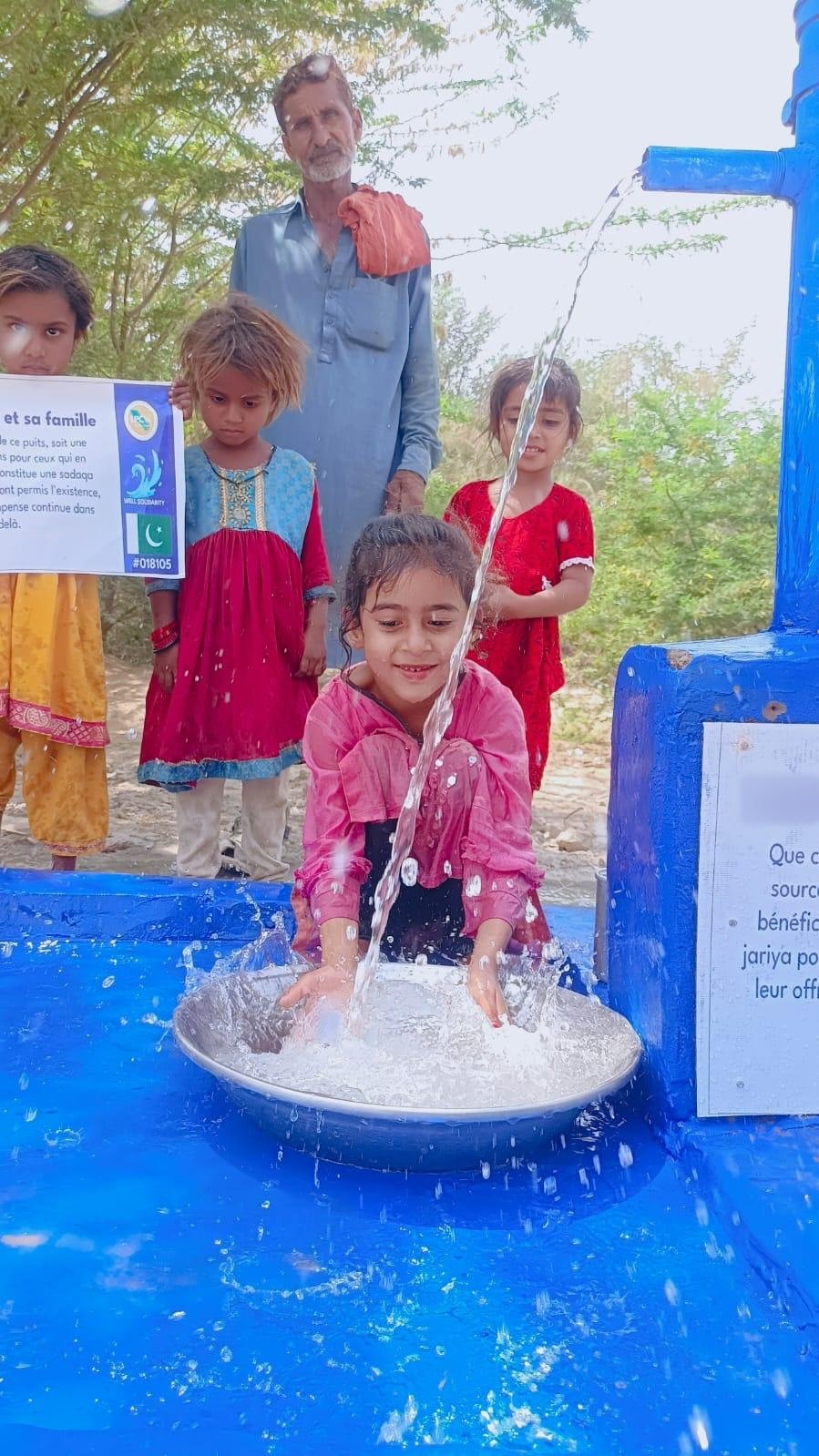
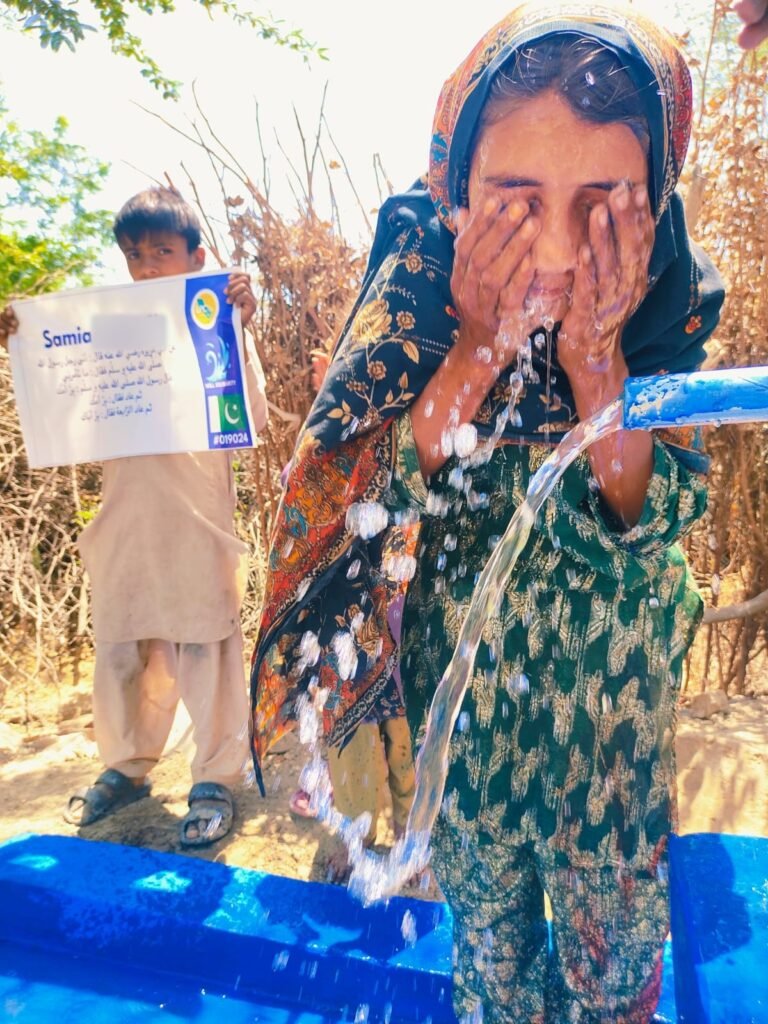
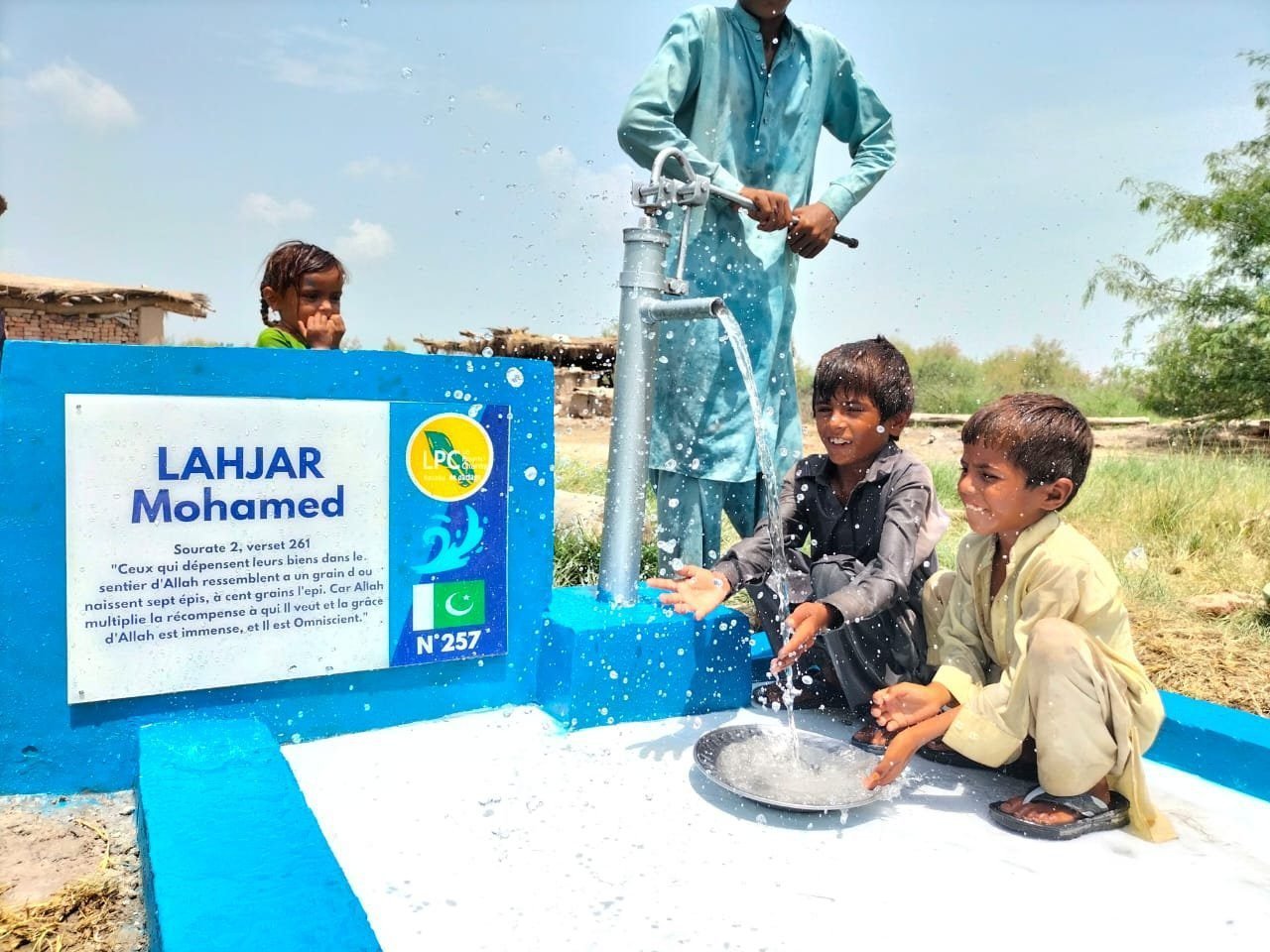
A borehole of 10 to 35 metres, a PVC casing with a screen that filters the sand, and a cast-iron hand pump on a concrete platform. It takes a team of three to five people two to four days to drill, and it works without electricity: a child can pump it, and a village mechanic can replace the leather cups and rods. A hamlet of five to ten families uses it for drinking, cooking, washing and the animals. It is the well Sa’d ibn Ubadah would recognise: dug, dedicated, and used every day.
Choose it if: you want the most reliable deed for the least money, you are giving on behalf of one person, or several siblings each want their own well. Limits: one outlet, so people queue at busy times; the water table must be within 35 metres, which is why we drill in Sindh.
The pump is simple on purpose: no electricity, parts a village mechanic can replace.
The hand pump, up close
Cast-iron pump, concrete platform, one outlet. A child can pump it, and the leather cups and rods are replaced by a village mechanic. This is the well most customers start with.
Classic well: hand-dug, for a village in Madagascar
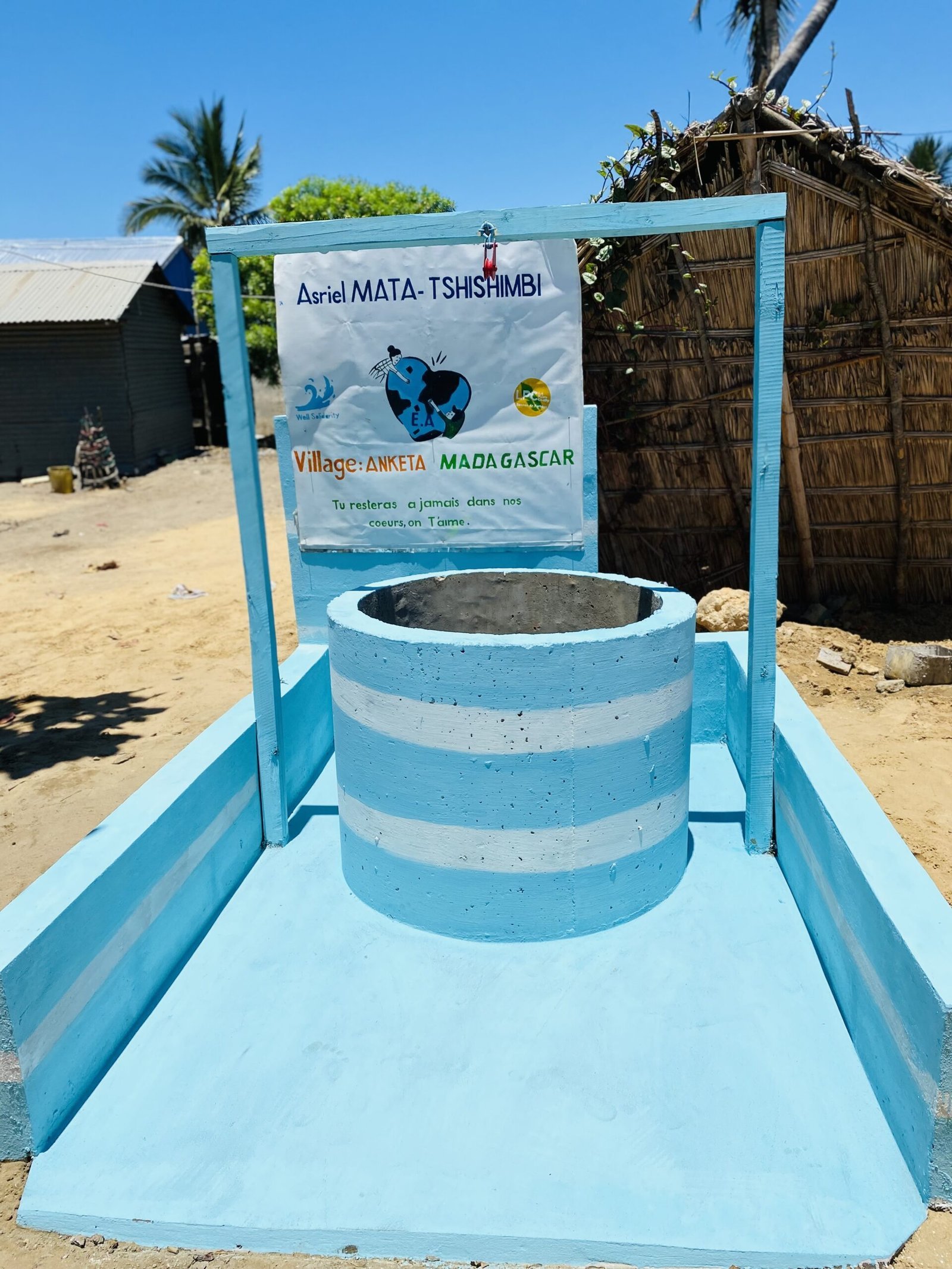
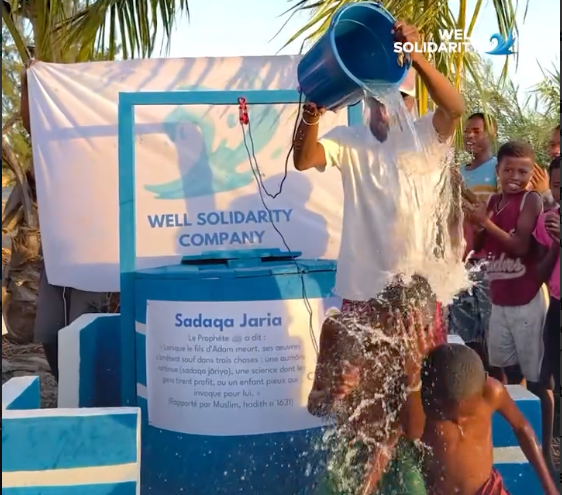
Where there is no drilling rig, and the water table is close to the surface, the oldest method still works: a well dug by hand to about seven metres, lined with concrete rings, with a rim and a rope and bucket. It serves up to 500 people because the whole village comes to it. No pump means nothing to break; the trade-off is effort, and more care about keeping the opening clean.
Choose it if: you want one well that serves a whole village, you want several names on a larger plaque, or you want your well in Africa rather than Asia. We explain why we build in Madagascar on the classic well page.
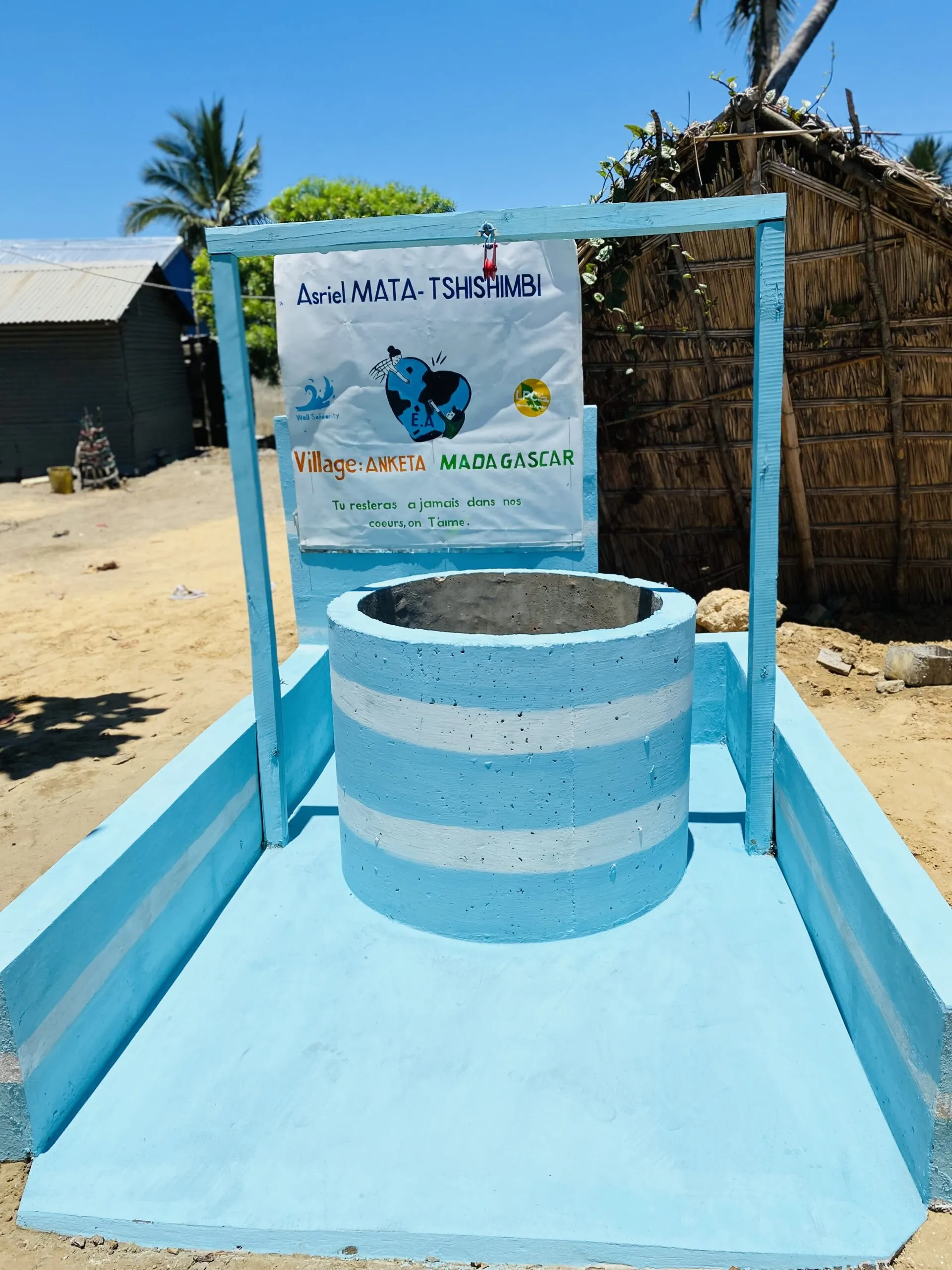
A classic well in Madagascar: hand-dug, concrete rings, a rim and a bucket, for a whole village.Hadith
“Whoever digs a well from which a living creature drinks, whether jinn, human or bird, Allah will reward him on the Day of Resurrection.”
Sahih Ibn Khuzaymah 1292; Sahih at-Targhib 964. Graded hasan by al-Albani.
Well with pump, taps and seating: for a school or a mosque
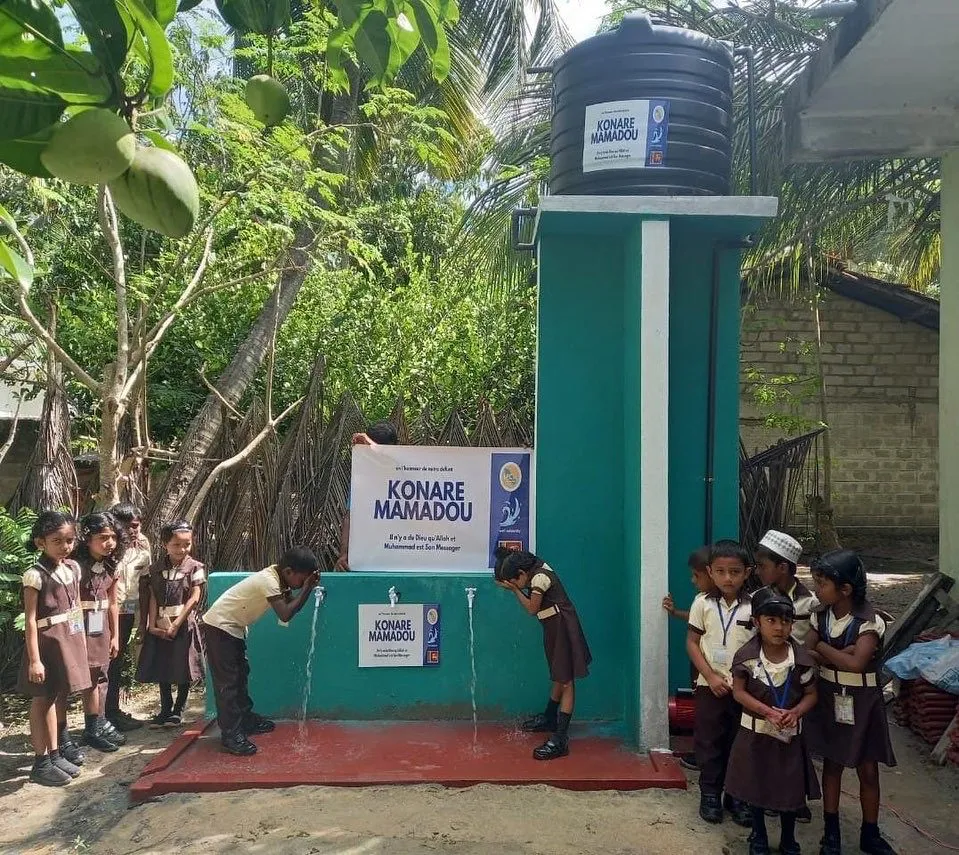
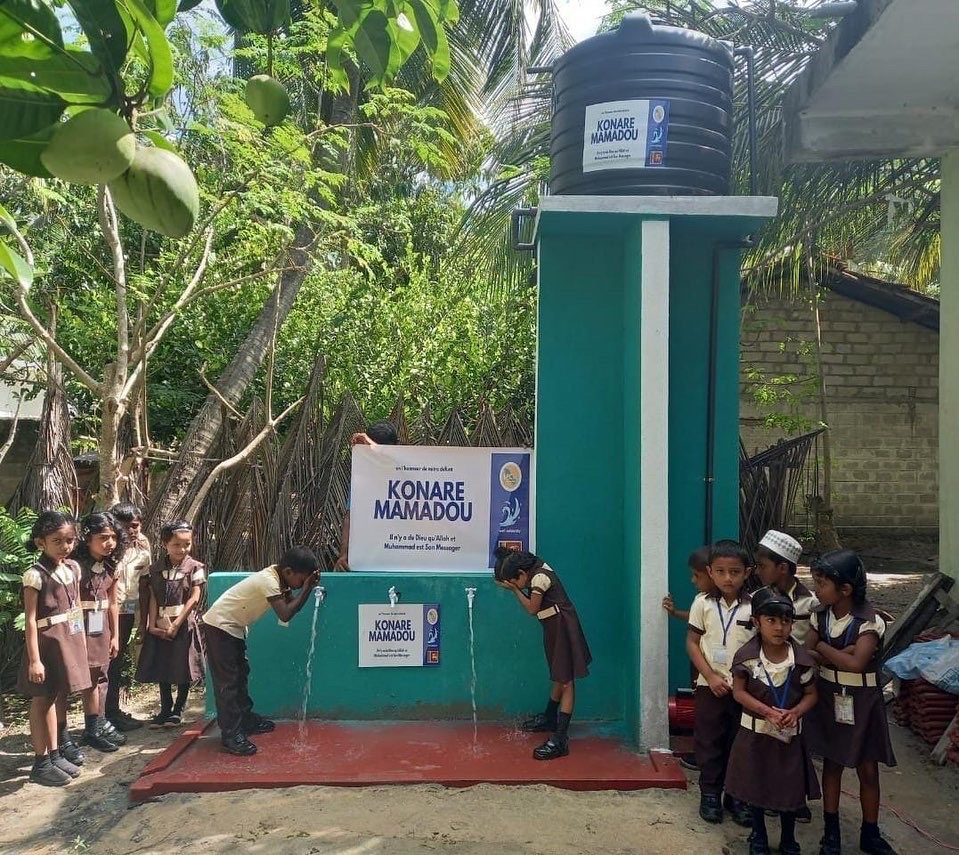
A deeper borehole fitted with a pump, hand or electric depending on the area, feeding five taps so that several families fill their containers at the same time, with benches around it. It is the well you build next to a school, a mosque or a market, where hundreds of people pass every day. Up to 700 people.
Choose it if: a group is giving together, or you are giving for a parent who taught, prayed or traded, and you want the well where crowds are.
Community well: a borehole with a tank
The largest: a borehole of up to 80 metres reaching a water table that does not drop in the dry season, an electric pump (solar panels where there is no grid), a storage tank, and 12 to 16 taps with seating. It is a small water network for a village of up to 900 people, and it takes three to four months. It needs a village committee to run it, which our team sets up.
Choose it if: a family, a mosque or a company is giving several thousand pounds and wants one project with one plaque for everyone. The community well page has the plans.
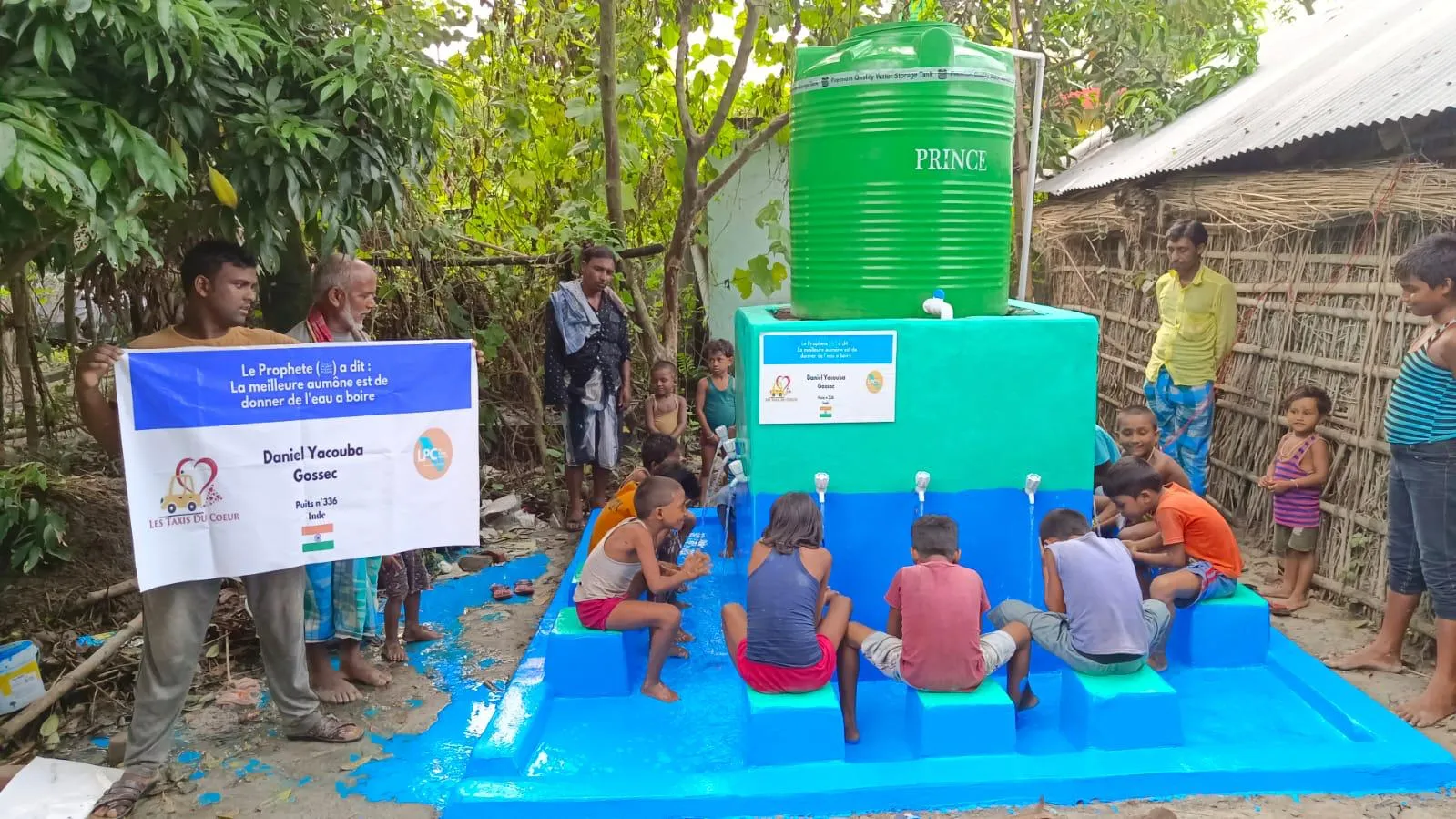
A community well: a tank, several taps and seating, for a whole village.
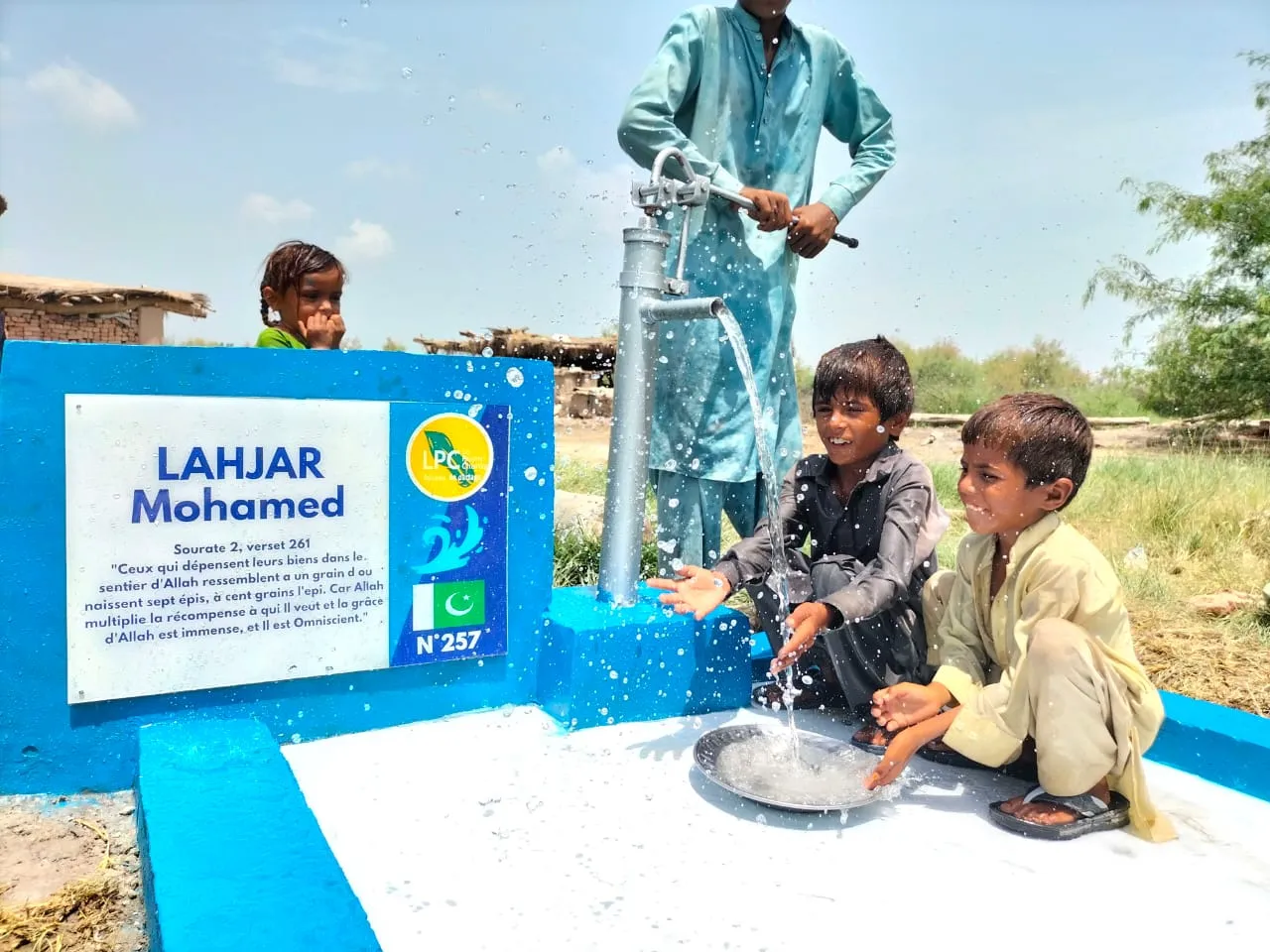
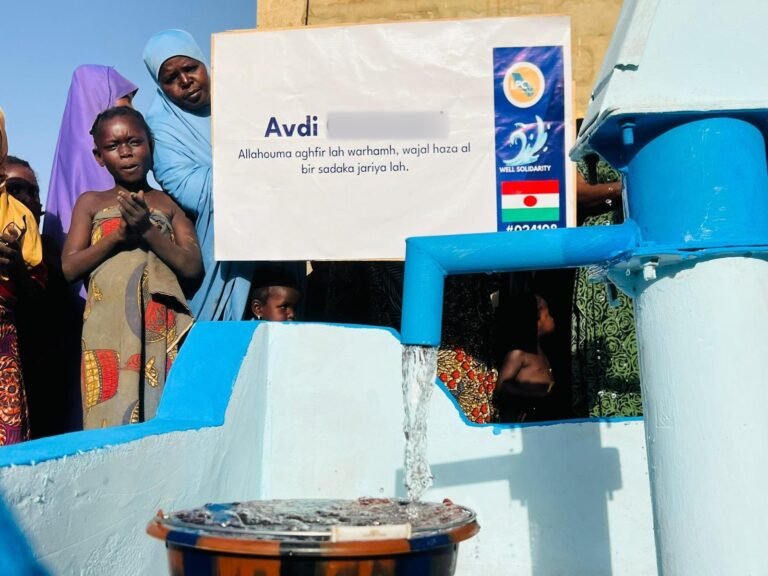
A hand-pump well in Pakistan, the day it was handed over.Inauguration of a classic well in Madagascar: the first bucket goes over the children.A Well Solidarity well in Niger. The plaque asks forgiveness for the person and names the well a sadaqah jariyah.
Three questions to decide
How many people do you want to serve? A family or a hamlet: hand pump. A village: classic or community. A place where crowds pass: taps and seating.
Who is it for? One name, one well: the hand pump is made for that. Several names, one deed: the larger plaques of the other three.
What is the budget? £195 is a complete, proven well. Everything above it buys reach, not more reward per pound. The hadith of the three deeds (Sahih Muslim 1631) does not mention depth.
Maintenance: who keeps the water flowing
A well is a sadaqah jariyah only while it works. Hand pumps are chosen for that reason: simple parts, replaceable locally. Electric pumps need a committee and a budget for repairs, which is why the community well includes training for the village. Our local teams in Sindh and Madagascar go back when a customer or a village reports a fault; ask us about the guarantee on each type. We explain how to compare builders on this point in Is a water well sadaqah jariyah? and the costs in How much does a water well cost?
What is the difference between a hand pump and a water well?
A hand pump is a type of well: a drilled borehole with a manual pump on top. A “deep well” or “village well” is a larger borehole with an electric pump, a tank and several taps. Both are wells; they differ in depth, number of users and maintenance.
Which well is best for sadaqah jariyah?
The one that is built and used. A £195 hand-pump well is a complete ongoing charity. Larger wells serve more people, which many families choose when giving together.
How long does each type of well last?
A hand pump works around ten years with normal upkeep and can be repaired beyond that. A hand-dug well lasts for decades if kept clean. Electric pumps last 5 to 10 years and are replaced by the village committee.
Why are your wells in Pakistan and Madagascar?
Because that is where our local teams are, where the water table allows the type of well we build, and where the need is high. Pakistan for drilled wells, Madagascar for hand-dug wells and fruit trees.
Can a group share one of the larger wells?
Yes. Families, mosques and companies share the well with seating or the community well and put several names on the plaque.
Sources
Technical data from the Well & Trees build protocol (Sindh and Madagascar teams), October 2026.