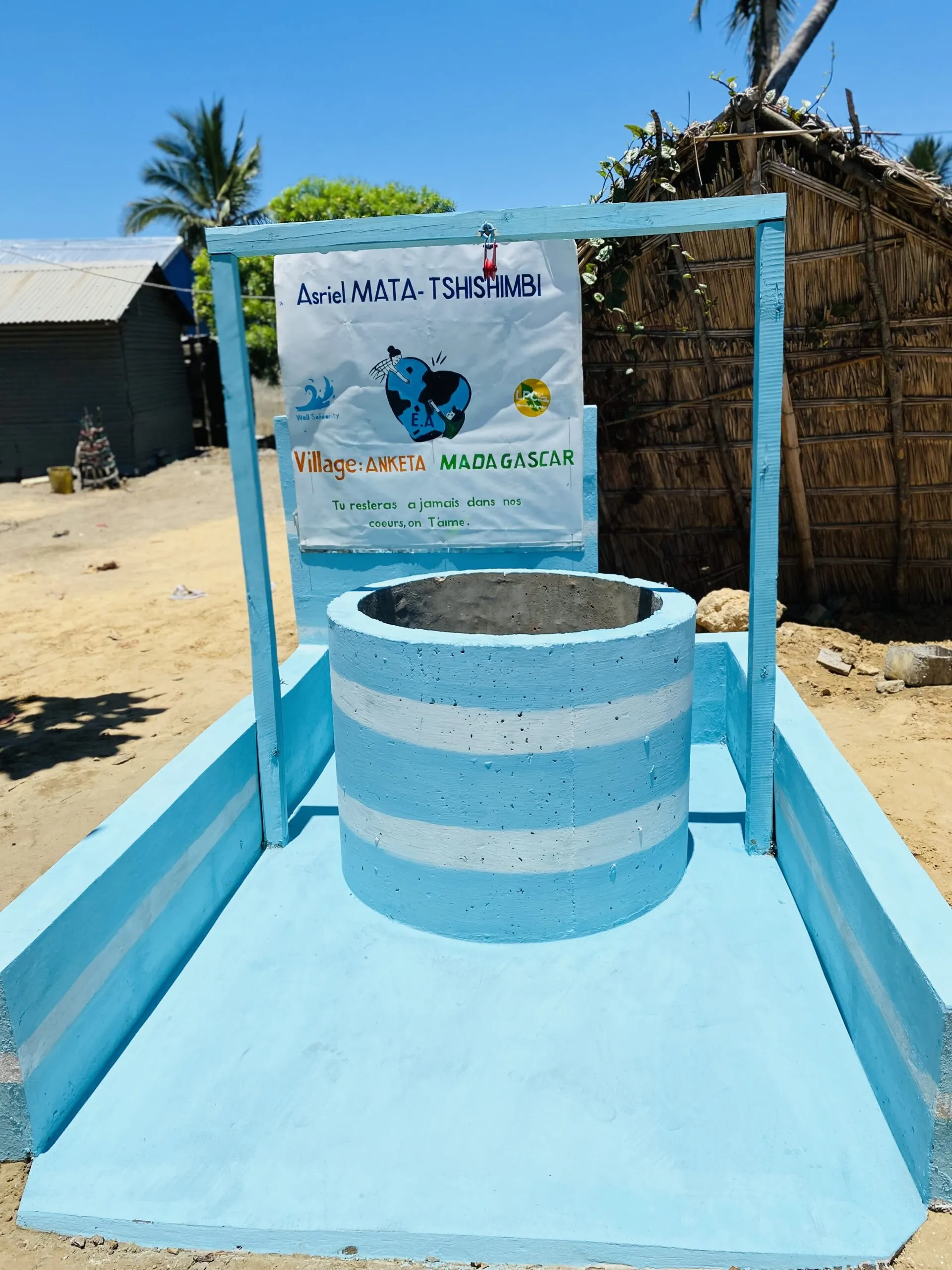
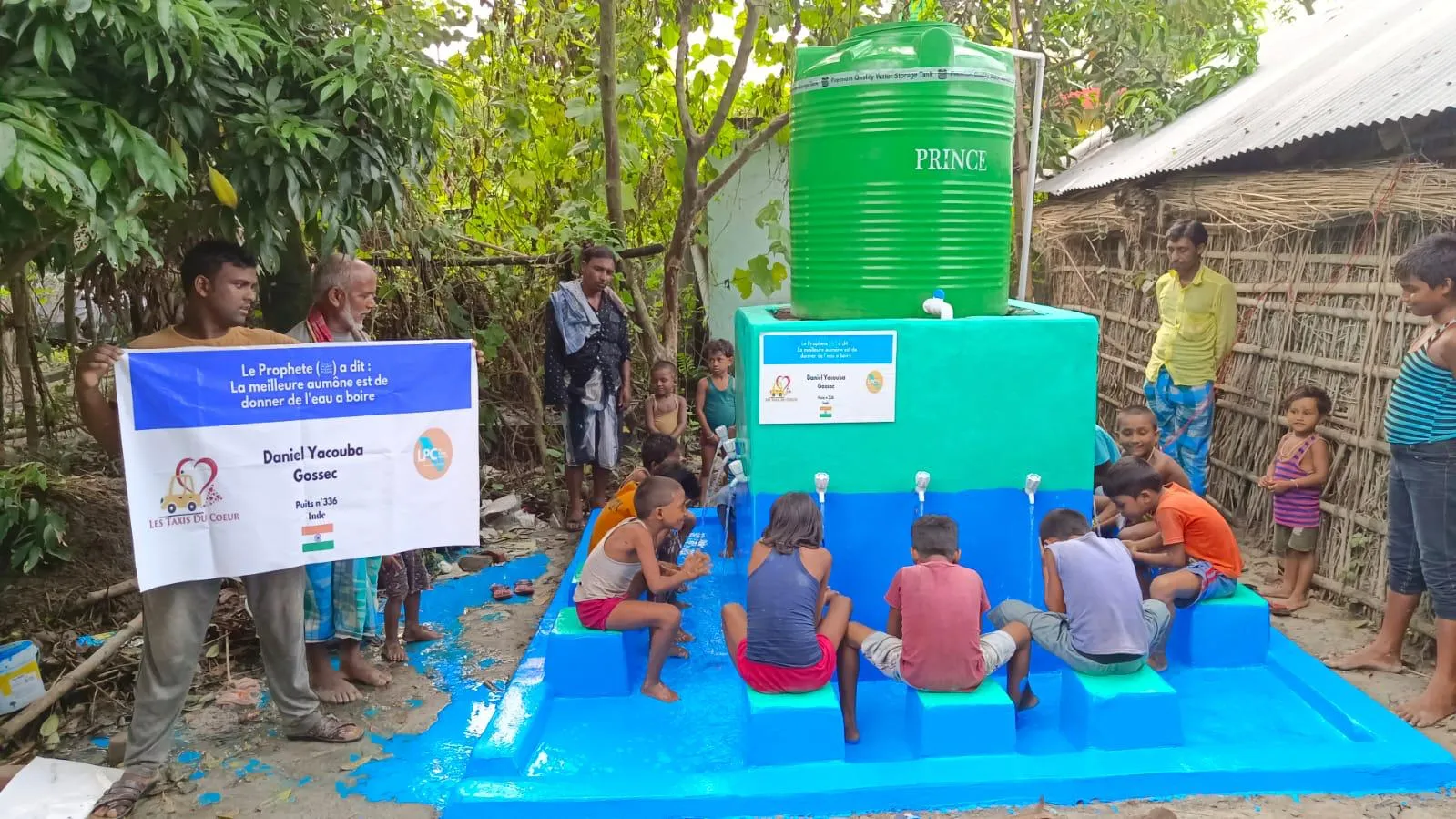
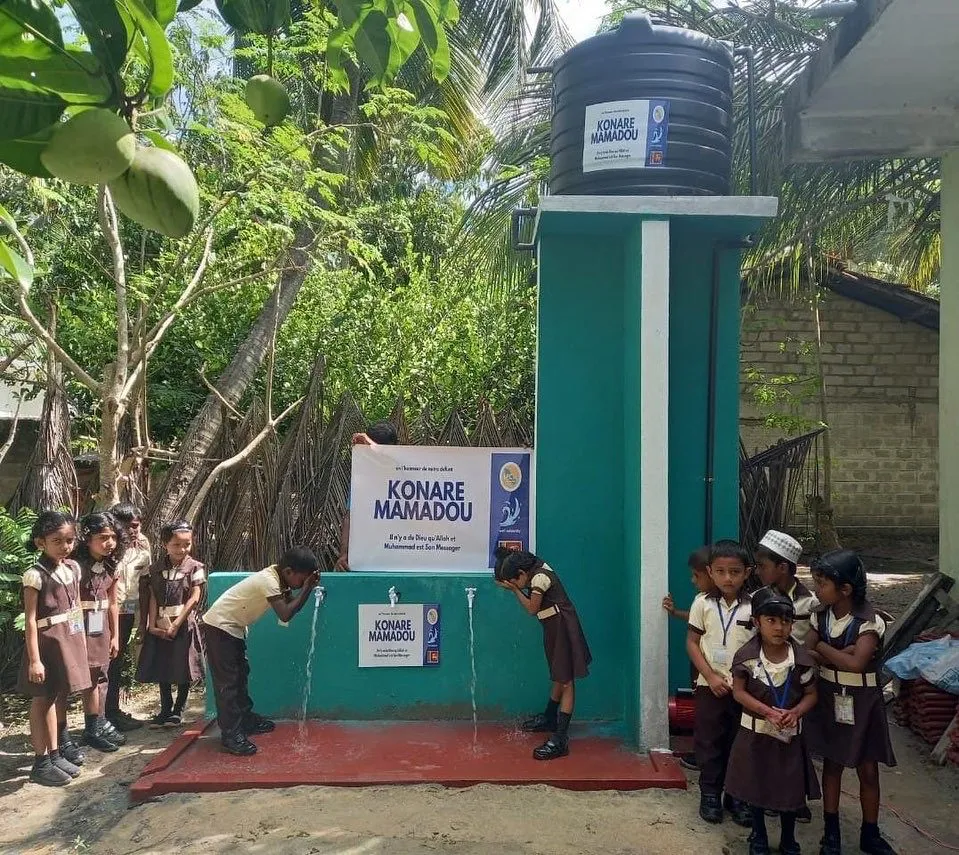
💧 Give a well in the name of a loved one: a gift that flows forever.
🌳 Plant a tree today and reap rewards for eternity.
🎁 Looking for an unforgettable gift? Give a sadaqah jariyah in your parents’ name.
📖 “The best charity is giving water to drink.” (Narrated by Abu Dawud)
📖 “Charity never decreases wealth.” (Muslim)
📖 “Whoever plants a tree will be rewarded for every creature that benefits from it.” (Bukhari and Muslim)
Yes, planting a tree is sadaqah jariyah. It is one of the few deeds the Prophet ﷺ described in those exact terms: a charity that is counted every time someone eats from it. This article gathers the hadiths on planting trees, explains what kind of tree makes an ongoing charity, and shows how a fruit tree in Madagascar works in practice.
In short
“There is no Muslim who plants a tree… but it is a charity for him” (Sahih al-Bukhari 2320).
Even what is stolen or eaten by animals counts (Sahih Muslim 1552).
“If the Hour comes while one of you holds a sapling, let him plant it” (Musnad Ahmad 12902).
A fruit tree feeds a family for decades: that is what makes it jariyah. From £28.
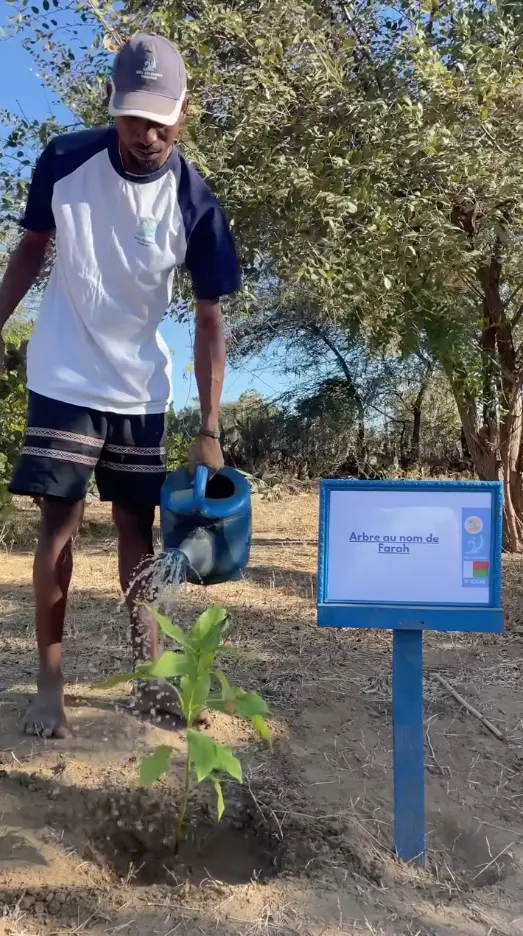
A tree planted in Madagascar in the name of Farah: the plaque stands next to the sapling, and the GPS point lets you find it again years later.
“There is no Muslim who plants a tree or sows a field, and a bird, a human or an animal eats from it, but it is a charity for him.”
Sahih al-Bukhari 2320, Sahih Muslim 1553, narrated by Anas ibn Malik.
The wording matters. The charity is not the act of planting; it is every mouthful eaten from the tree, by anyone or anything, for as long as it bears fruit. That is the definition of an ongoing charity. A mango tree that feeds a family and the neighbourhood birds for forty years writes forty years of charity in the name of the person who planted it.
Even what is stolen counts
Hadith
“No Muslim plants a tree, except that whatever is eaten from it is a charity for him, whatever is stolen from it is a charity for him, whatever a wild animal eats from it is a charity for him, whatever a bird eats is a charity for him, and no one takes from it but it is a charity for him.”
Sahih Muslim 1552, narrated by Jabir ibn Abdullah.
This narration removes the worry many people have: what if the family does not look after it, what if the fruit is taken? Every fruit that leaves the tree is counted, whoever takes it. The reward does not depend on gratitude.
One tree, decades of charity
A mango or guava tree in Madagascar bears fruit from the third year and keeps giving for forty. Every fruit eaten is counted (Sahih al-Bukhari 2320).
Plant it, even at the end of the world
Hadith
“If the Hour comes while one of you is holding a sapling in his hand, and he is able to plant it before it comes, let him plant it.”
Musnad Ahmad 12902, narrated by Anas ibn Malik. Graded sahih by al-Albani (as-Silsilah as-Sahihah 9).
Few texts say so clearly that a good deed is worth doing for its own sake. Planting is encouraged even when no one will eat the fruit. In normal times, when the tree will feed people for decades, there is no reason to hesitate.
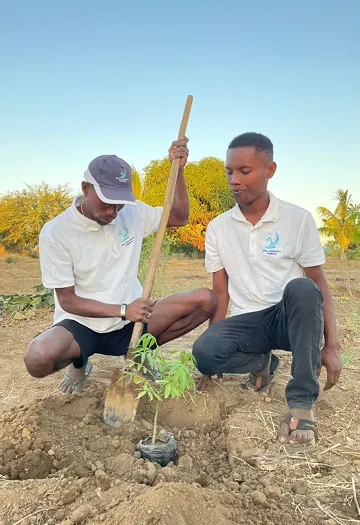
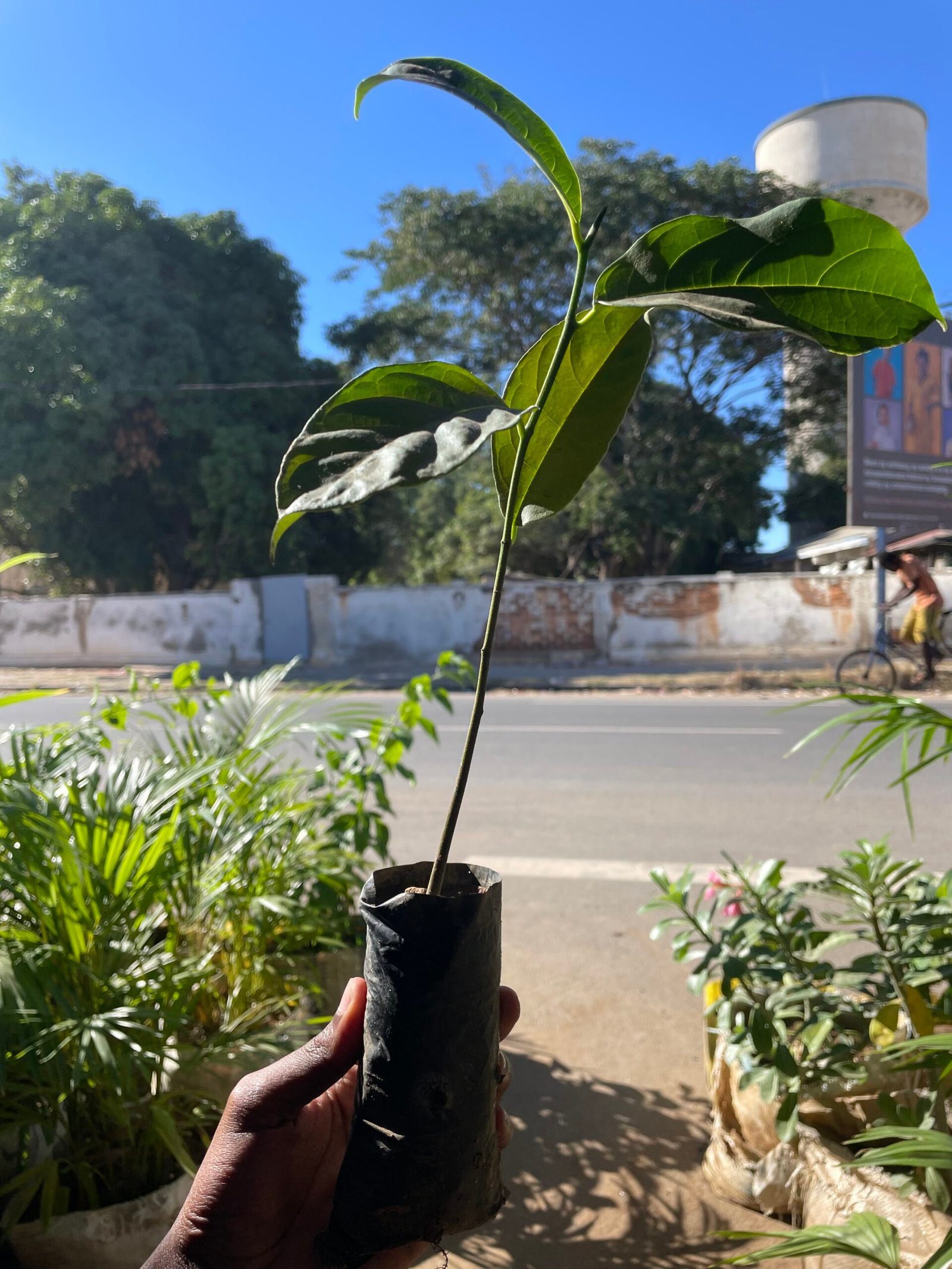
Planting day: the sapling leaves its bag and goes into the ground, with the family who will look after it.
Planting day
The sapling leaves its nursery bag and goes into red Madagascar soil, with the family who will water it. Three years later, the first mangoes. The charity starts with the first fruit eaten.
What kind of tree is a sadaqah jariyah?
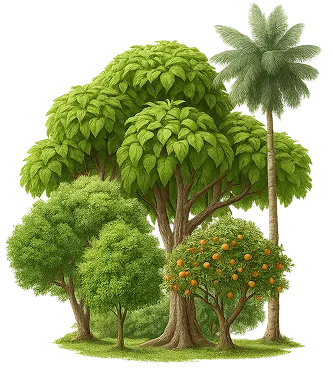
Any tree someone eats from. But not every tree is equal. A decorative tree gives shade; a fruit tree gives shade, fruit to eat, fruit to sell, and seeds for the next tree. That is why we plant fruit trees, and why we plant them for a family rather than in a forest nobody lives in.
Mango, guava, papaya, jackfruit: fruit within 2 to 4 years, every year, for decades. A family eats some and sells the rest.
Lemon, orange, mandarin: smaller trees, quick to bear, and the fruit keeps.
Avocado, coconut, lychee: slower, but high value once mature.
Olive trees: the symbol everyone knows, but they do not grow in Madagascar or Pakistan and give nothing to eat for years. We explain the choice in our trees page.
In Madagascar, where our trees are planted, fewer than one family in two has enough to eat all year. A tree that bears fruit is food and income, and a village that keeps its trees alive keeps its soil and its water.
Planting a tree for someone who has passed away
A tree is often the first sadaqah jariyah a family gives after a death, because it is affordable and because it grows. Charity given on behalf of a deceased Muslim reaches them (Sahih al-Bukhari 1388), and every fruit eaten from “their” tree is written for them. Write their name on the plaque; it is photographed next to the sapling, and you can go back to the GPS point years later. See Plant a tree in memory of someone and sadaqah jariyah for deceased parents.
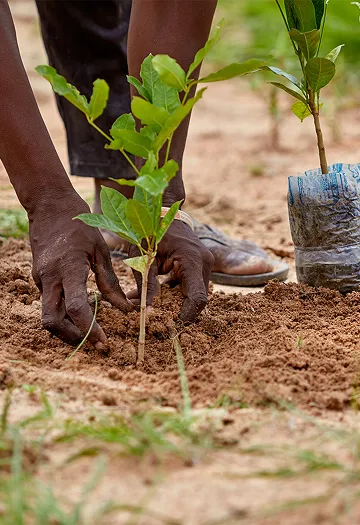
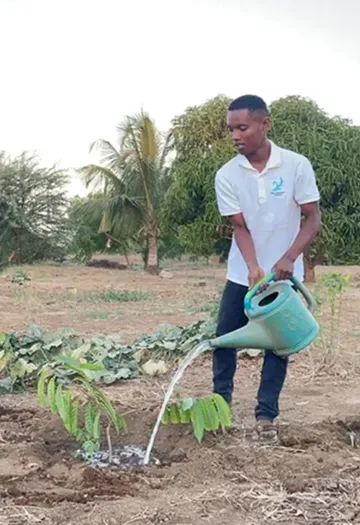
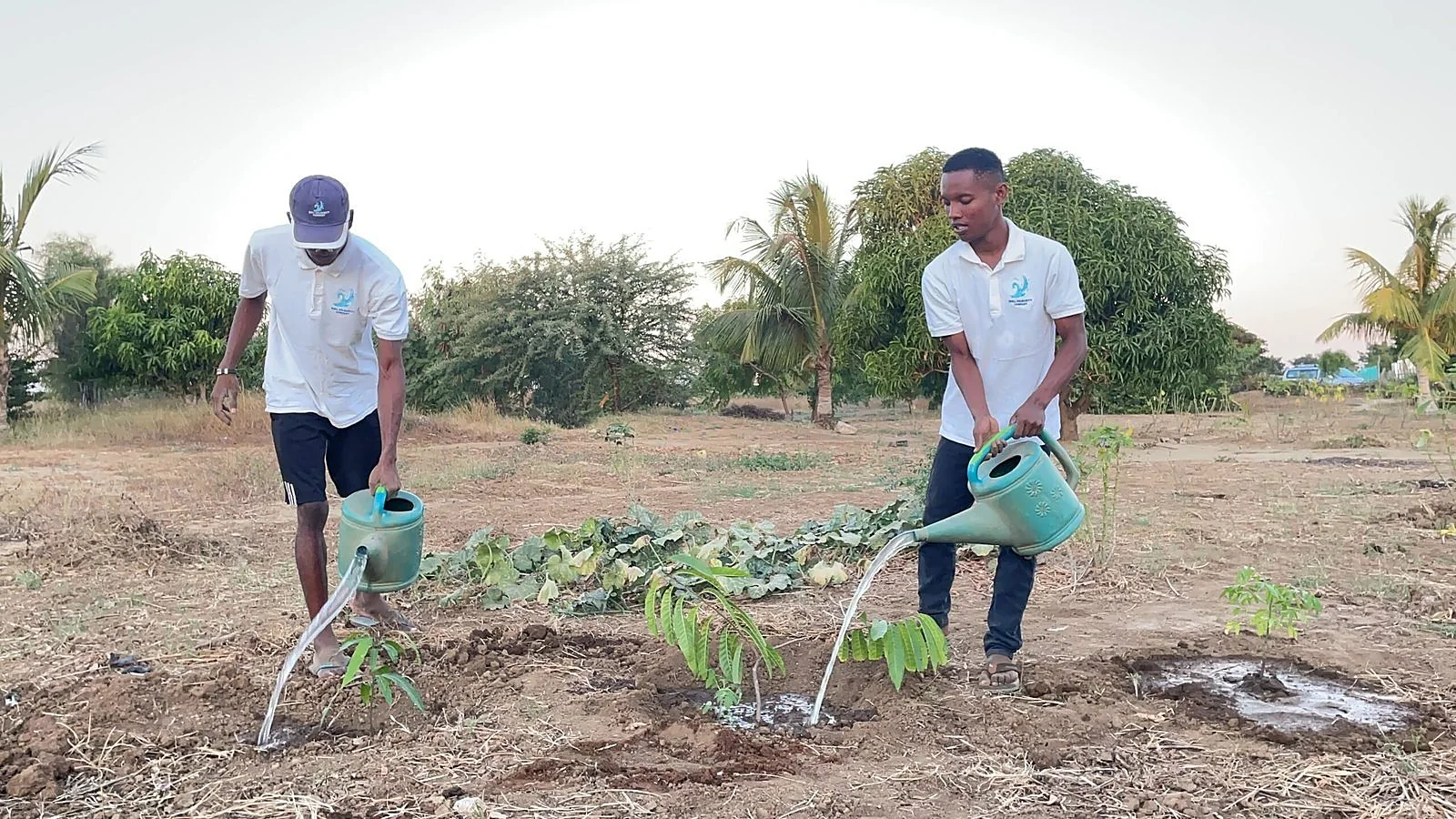
Watering a young tree in Madagascar. Mango, guava, papaya, lemon: species chosen for the soil and the family.Our team in Madagascar plants, photographs and follows every tree.From the nursery to the family: a sapling ready to be planted.
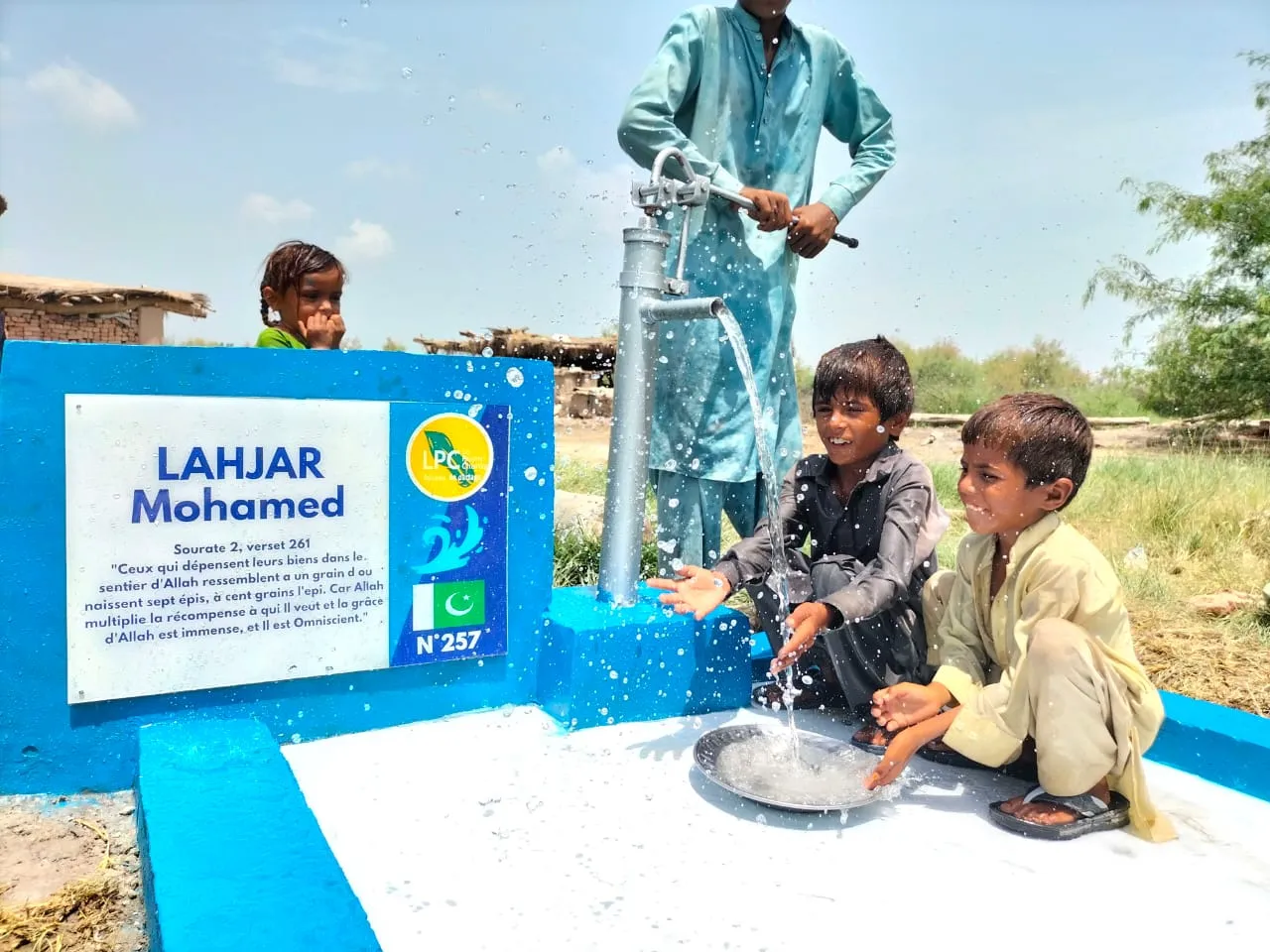
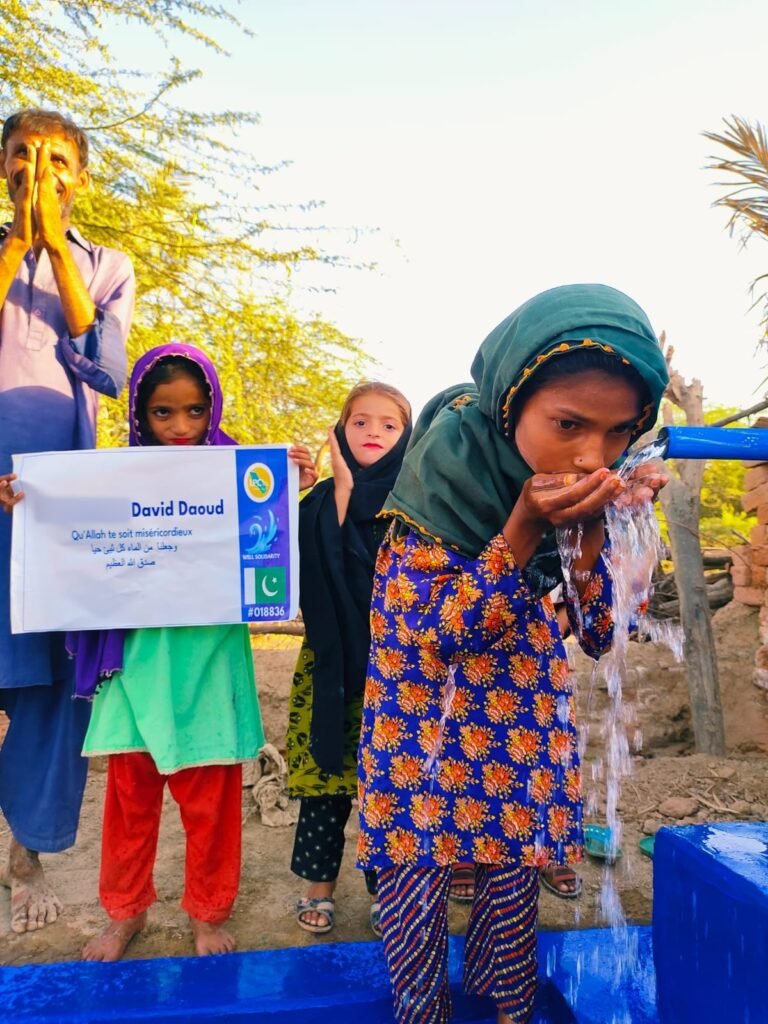
A hand-pump well in rural Pakistan: clean groundwater at the door, every day.
The other ongoing charity
A fruit tree feeds one family; a hand-pump well serves a hamlet. Both were named by the Prophet ﷺ as charities that keep giving. Many families give a tree for each child and a well for each parent.
Tree or well: which should you choose?
Both are ongoing charities, and both were mentioned by the Prophet ﷺ. The difference is scale and budget. A hand-pump well in Pakistan serves up to 50 people every day for £195; a fruit tree feeds one family for £28. Many customers start with a tree, then build a well, or give a tree for each child and a well for each parent. There is no wrong order.
The first weeks decide everything: our team waters and checks the young trees.
How the tree is planted and proven
You order and write the name for the plaque.
Our team in Madagascar chooses a family and a species suited to the soil, and plants the sapling with them.
You receive the GPS location and the photos of the planting and the plaque, within about 3 months.
The family looks after it, with our team checking the plantation. The fruit is theirs; the charity is yours.
Yes. The Prophet ﷺ said that whoever plants a tree from which a human, a bird or an animal eats has a charity for it (Sahih al-Bukhari 2320), and the charity continues for as long as the tree bears fruit.
Does it count if I pay someone else to plant it?
Yes. The reward follows the intention and the money, as with a well that Sa’d ibn Ubadah had dug for his mother. You pay for the tree, it is planted in your name or the name you choose.
Which tree is best as sadaqah jariyah?
A fruit tree that people eat from, suited to the place it is planted. In Madagascar: mango, guava, papaya, jackfruit, lemon. Olive trees do not grow there.
Can I plant a tree on behalf of a deceased person?
Yes. Charity on behalf of a deceased Muslim reaches them (Sahih al-Bukhari 1388). Write their name when you order and it goes on the plaque next to the tree.
What if the tree dies?
Our team in Madagascar checks the plantations and replaces saplings that fail in the first months. Trees are chosen for the local soil and climate to give them the best chance.
Sources
Sahih al-Bukhari 2320; Sahih Muslim 1553 (planting a tree is a charity).
Sahih Muslim 1552 (what is stolen or eaten by animals counts).
Musnad Ahmad 12902; as-Silsilah as-Sahihah 9 (plant the sapling even if the Hour comes).
Sahih al-Bukhari 1388 (charity on behalf of the deceased).